Autumn garden jobs: what has to be done before the frost
Three things in autumn have a real deadline. Whatever cannot take frost comes in before the first frosty night. Whatever needs to root goes in the ground four to six weeks before the soil freezes. And the leaves come off the lawn before they turn into a wet mat under the snow.
Everything else on the autumn list you do because you want to, not because the plants need it. A couple of the most ingrained chores do more harm than good, and cutting down every perennial is the worst of them.
A word on where this comes from. Gardian is a Swedish garden app, and this advice was worked out where winters are long and the ground freezes solid. In Sweden the first frost can come four months apart from one end of the country to the other, which is why everything below runs off your frost date and not off the calendar. If your winters are mild, you will find whole jobs here you can skip.
When does the first frost come where you live?
It is the frost date, not the calendar, that runs the autumn. In Sweden, the first frosty night comes in early August in parts of the mountains, while the southern coast can stay frost-free until late November. Nearly four months apart in the same country. That is why a national autumn checklist is wrong for most people who read it, and an international one even more so.
Look up your average first frost date. Seed catalogues and almanacs list it by postcode or ZIP code, and in the US it is the number every extension office works from. It is the only number you need for the rest of the autumn.
| Your winter | Typical first frost | Last sensible day to plant trees and shrubs |
|---|---|---|
| Mild and wet, the ground rarely freezes (most of Britain and Ireland, coastal western Europe, the Pacific Northwest) | late October to December, some years hardly at all | no autumn deadline: plant any time from October to April while the soil is neither frozen nor waterlogged |
| Cold, the ground freezes for weeks (southern Scandinavia, central and eastern Europe, the US Northeast and Midwest, southern Canada) | late September to October | late September to early October |
| Long and hard, the ground freezes for months (northern Scandinavia and Finland, much of Canada, the mountains) | August to September | mid-August to early September |
Hardiness zones are a blunt tool here. A USDA zone, or any map like it, tells you how cold your winter gets and therefore what survives it. It says nothing about when your soil freezes, and the microclimate can differ by a whole zone between a town garden and the edge of a field a kilometre away.
What has to go in the ground before the frost, and what is too late?
Everything that needs to root before winter has the same deadline: four to six weeks before the ground freezes. Roots keep growing as long as the soil stays above freezing, and that is the time you are buying.
Trees and shrubs go in within that window. Where the ground freezes, that means September in a cold-winter garden and earlier where winter is long. The soil is still warm and the autumn rain does the watering for you. Plant too late and the root ball never grips the soil, and when frost heaves the ground the ball simply gets pushed back up. You find the shrub half out of the bed in late winter when the frost lets go and think it froze to death. It was evicted. In a mild climate the rule turns round: the RHS calls October to April the best planting season, because the soil never freezes long enough to heave anything. How much water a new tree needs afterwards is in the article on watering newly planted trees, and how to protect a young tree from voles and late-winter sun in the article on young trees in winter.
Daffodils and other spring bulbs want the same window as the shrubs. Tulips are the exception: they do not need to root before winter, so tulip bulbs can go in until you can no longer get a spade into the ground, which in a mild climate often means December. Plant them two to three times the bulb's height deep, in practice 10 to 20 centimetres depending on the bulb. The last planting dates by climate and the depth for every bulb are in the article on when to plant bulbs. If you bought bulbs and have not got round to them, plant the daffodils first and let the tulips wait. That is the priority people get backwards.
Garlic goes in when the soil is around 8 °C (46 °F), because that is when the clove starts to root. Where winters are long that means September, where they are cold from mid-October to late November, and in a mild garden well into December. A soil thermometer costs very little and is the one measuring tool I get out every autumn. How deep the clove goes and which end goes up is in the article on when to plant garlic.
Overseeding the lawn has to happen while the soil is still at 10 °C (50 °F). Below that the seed germinates slowly, and seedlings that come up in the frosty nights are too small to survive the winter.
When is it too late to prune?
Prune apple trees and most ornamental shrubs in summer, roughly July to September, while the tree is in full leaf. The wound dries fast in the warmth and the tree has time to seal it before autumn turns wet.
Then put the secateurs away when the leaves start to turn. Cuts made in autumn never dry out properly, and an open wound that stays wet for months is an invitation to rot. Wait until winter instead. The RHS winter-prunes apples and pears any time the tree is dormant, from November to early March, which works where winter is mild. Where it is hard, wait until late winter, before the buds swell, so the cuts are not sitting open through the frost.
Plums and cherries are different everywhere. Prune them only in summer, because silver leaf, a fungus that enters through pruning cuts, spreads its spores from September to May.
The one practical exception in an ordinary garden is the grapevine, which you prune after leaf fall and before Christmas.
The same goes for the hedge. Trim so late that the new shoots cannot ripen before the first frost and the tips freeze off, and you only see it in spring.
The fruit under the tree is not rubbish, it is a source of disease
This is the only autumn tidy-up that is not up for negotiation, and it takes twenty minutes.
Pick up the windfalls under the apple and plum trees, and above all pick off the dried, shrivelled fruit mummies still hanging in the branches. Brown rot, Monilinia, overwinters in exactly those mummies and infects next year's blossom from there. A single mummy left behind is enough to start a new year.
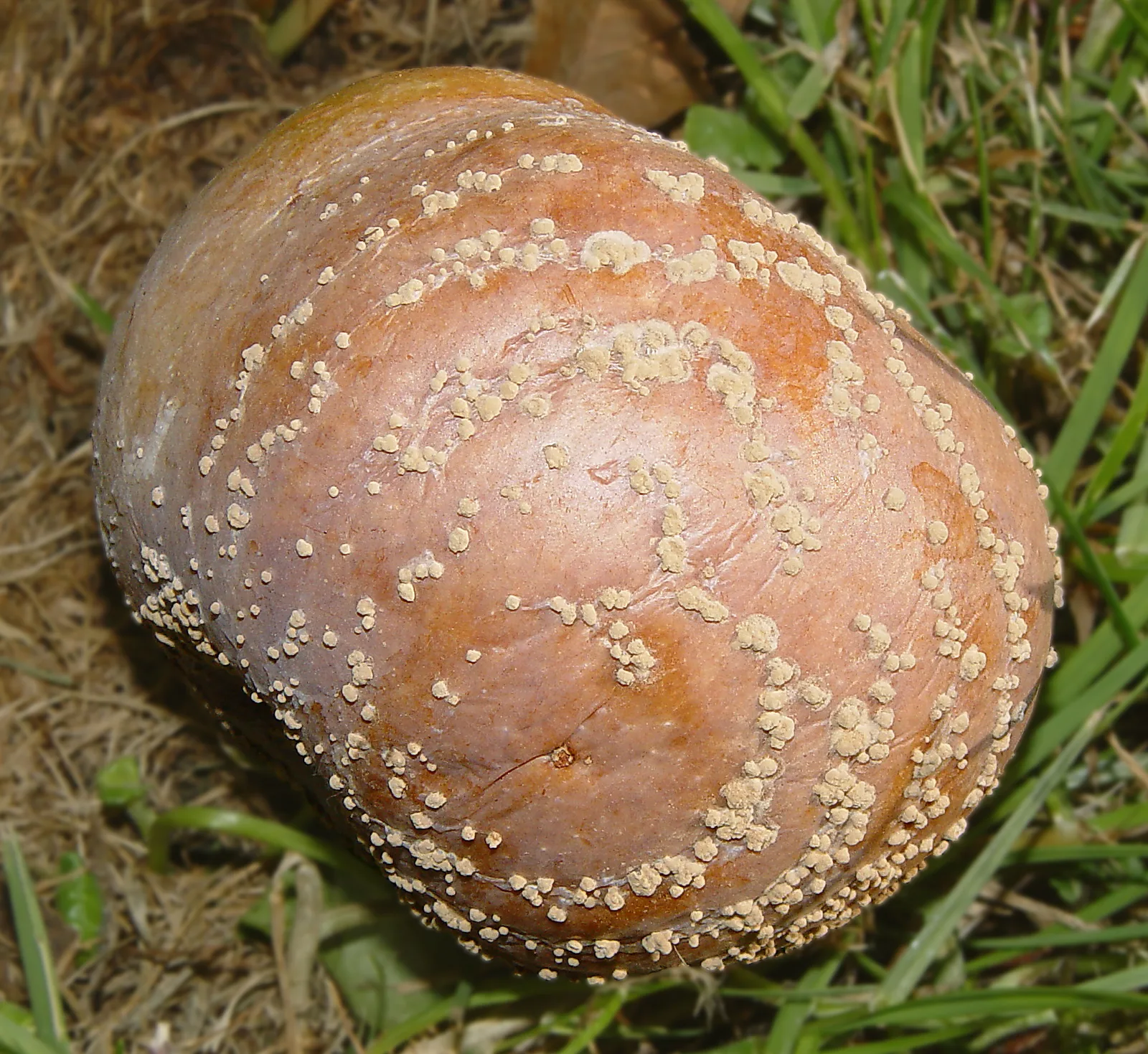
If the tree has had apple scab, the olive-brown, cracked spots on fruit and leaves, the leaves under that tree have to go too. The fungus overwinters in the fallen leaves and sends up spores as the new leaves open in spring. It is the one place in the garden where I rake up every last leaf.
Do not put scab or brown rot in the ordinary compost unless it gets properly hot. Take it to the tip, or put it in a green waste collection that composts at high temperature.
What do you do with all the leaves?
Short answer: off the lawn, onto the borders.
Grass suffocates under a thick wet layer of leaves and comes up yellow and patchy in spring. So rake the leaves into the borders instead of into bags. Oak and beech leaves are the best for this, because they break down slowly and keep the layer airy instead of matting into a sour slab. If there are more than the borders need, make a pile in a corner. It is a free winter home for hedgehogs, where you have them, and for beneficial insects. If you would rather turn the surplus into soil, that is in the article on leaf mould.
A thin layer of leaves on the lawn you can shred by simply running the mower over it. The condition almost nobody mentions: it only works while the top of the soil stays at 6 °C (43 °F) or more, because that is when there is life in the soil to break the shreds down. Mow the leaves once the ground has dropped below that and the shreds lie there all winter and do exactly the same damage as whole leaves. How often to rake, and when the last time is where you live, is in the article on raking leaves off the lawn.
Skip: Raking the borders clean and digging them over for winter. Autumn digging does loosen heavy clay, but it breaks up the fungal networks and worm channels and leaves bare soil that the rain packs down and the nutrients wash out of.
Should you cut down the perennials?
No. Leave them standing.
Sweden's garden society, Riksförbundet Svensk Trädgård, is clear about why. Cut a perennial down while it is still green and juicy and it cannot draw its food back into the roots, and it comes back weaker next year. Hollow stems you cut off also lead water down into the crown, which then freezes or rots. The dead stalks are the plant's own winter protection. They are also food for birds in midwinter and, with hoarfrost on them, honestly the only thing happening in a northern garden at that time of year.
If you do have to cut something, say a perennial that has flopped over the path or one with mildew, cut it when it is completely dead and leave 5 to 10 centimetres of stubble. Never pull it up. The dormant buds sit down at the base and come with it.
Skip: The great autumn cut-down of the whole border. It is half a day's work that makes the plants weaker and the garden duller.
The lawn: the last cut and the last feed
Mow as long as the grass is growing, and make the last cut once growth has stopped. Aim for 4 to 5 centimetres (about 2 inches). It is a trade-off both ways. Grass cut too short gets sensitive to cold and lets moss in. Grass left too long folds over into a dense, damp mat, and that is exactly what snow mould needs. The same fungus, Microdochium nivale, causes fusarium patch in mild, wet winters without any snow, so this holds whatever your winter.
Collect the clippings this time. Leaving clippings on the lawn is right all summer and wrong for the last cut.
If you feed in autumn, use an autumn lawn feed, high in potassium and low in nitrogen. Potassium toughens the cell walls for the cold. Nitrogen does the opposite and pushes out soft new growth just when the grass should be going to rest, and that growth is what the fungus lives on. Almost every autumn product on sale has the right balance, so just check that the nitrogen figure is low.
Warning: Spread ordinary summer feed this late and you have actively done harm, in the borders as much as on the lawn. Anything that pushes out soft new growth in the weeks before the first frost freezes off.
Skip: Killing moss in a late autumn. Where the grass stops growing in October, you kill the moss and leave bare soil all winter, which spring fills with new moss plus weeds. Scarify and overseed in spring once the soil reaches 10 °C instead. In a mild climate where the grass grows into November, early autumn works too. How is in the article on moss in the lawn.
What freezes and breaks: do this at the first frost warning
Now it gets urgent, because none of this can be made up later.
Dahlias and gladioli do not survive a hard winter in the ground. Wait until the first light frost has blackened the foliage, then dig up the tubers, shake off the soil and let them dry for a few days somewhere cool and frost-free. Pack them in dry wood shavings, compost or sand and store them at 4 to 6 °C (39 to 43 °F). A cellar or a cold garage will do. Below freezing, the tuber is gone. In a mild garden with well-drained soil you can often skip the lifting: the RHS says that in the milder parts of Britain, cutting the tops back and covering the crown with a thick mulch can get them through. On heavy clay that stays wet, lift them anyway. How to keep an eye on the tubers through the winter is in the article on overwintering plants.
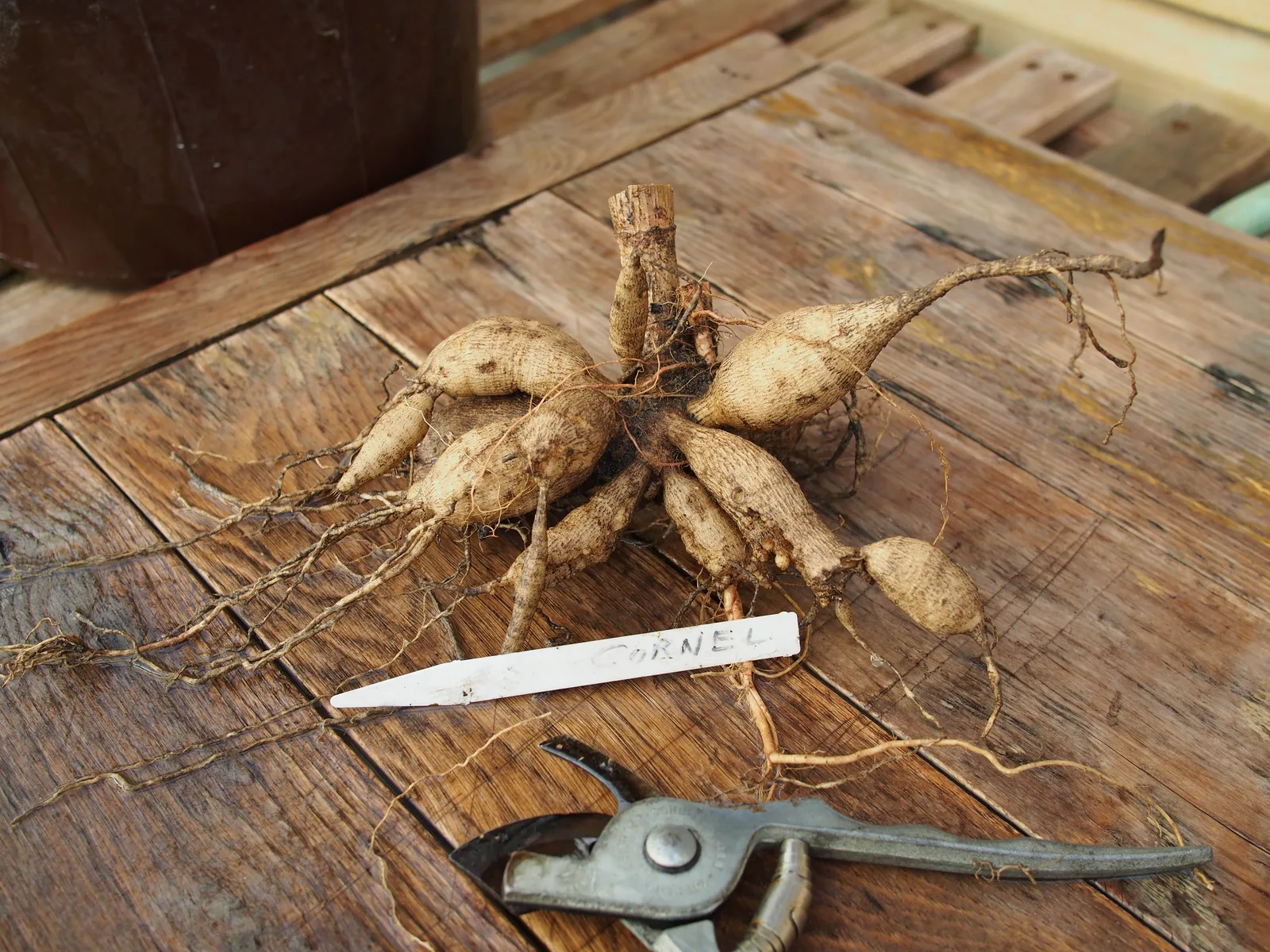
Tip: Write the variety on a strip of masking tape and stick it to the tuber before you pack it away. When you open the box in spring, every dahlia tuber looks the same.
Water is the item people forget and then pay the most for. Disconnect the garden hose and drain it, because a hose left full over winter splits at the kinks. Turn off the outside tap's supply from inside, open the tap outdoors so the pipe drains, and leave it open all winter. A frost-free tap only protects itself if the hose is off it. Empty the water butt or turn it upside down. A full plastic butt splits at the seam when the ice expands, and you will not see the split until you fill it in spring.
Pots of terracotta and unglazed clay crack for the same reason. Empty them or stand them on their side under cover. Frost-proof pots can stay out, but lift them off the ground on feet so they do not freeze onto a sheet of ice.
Roses get hilled up last, not first
In a cold-winter garden, hill up the roses once the leaves have fallen and the surface of the soil has frozen. Hill them too early and you seal damp, warm soil round the base and get mould instead of protection. In a mild climate most roses need no hilling at all.
Use soil from the border and build a mound round the bottom 20 centimetres (8 inches). I never use peat for this. It soaks up water, turns cold and wet, and thaws so slowly in spring that the rose stands in a frozen lump when the rest of the garden has already woken up. Which roses need hilling and when the mound comes off in spring is in the article on hilling roses.
If you cover the branches as well, keep it airy with hessian or shade cloth. A tight, warm parcel goes mouldy, and mice move in.
Skip: Putting on the winter cover while the days are still at eight degrees above freezing. Winter protection laid on before the cold has arrived does more harm than good, just like hilling too early.
Water the evergreens before the ground freezes
If the autumn is dry and your ground freezes in winter, give arborvitae (thuja), yew, box and rhododendron a thorough soaking in the last weeks before it does.
The reason is winter scorch, the most common cause of a thuja hedge standing brown in spring. The plant loses water through its needles and leaves as soon as the sun starts to warm in late winter, but the roots sit in frozen soil and cannot replace it. The RHS puts it plainly: plants cannot take up moisture from frozen soil, and the leaves dry out and scorch. The only reserve the plant has is the water you gave it before the frost came. Put a layer of leaves or compost over the root zone too, especially round rhododendrons, which have shallow roots.
What do the rules say about your garden waste?
The rules differ by country and often by town, so this section is about what to check rather than what the law says where you are. Two things matter more in autumn than at any other time of year.
Bonfires. Many councils and municipalities restrict or ban burning garden waste, and some only allow it in certain months. In Sweden it is allowed on a small scale, but the municipality can forbid it and many do. Check the local rules before you light anything, not after.
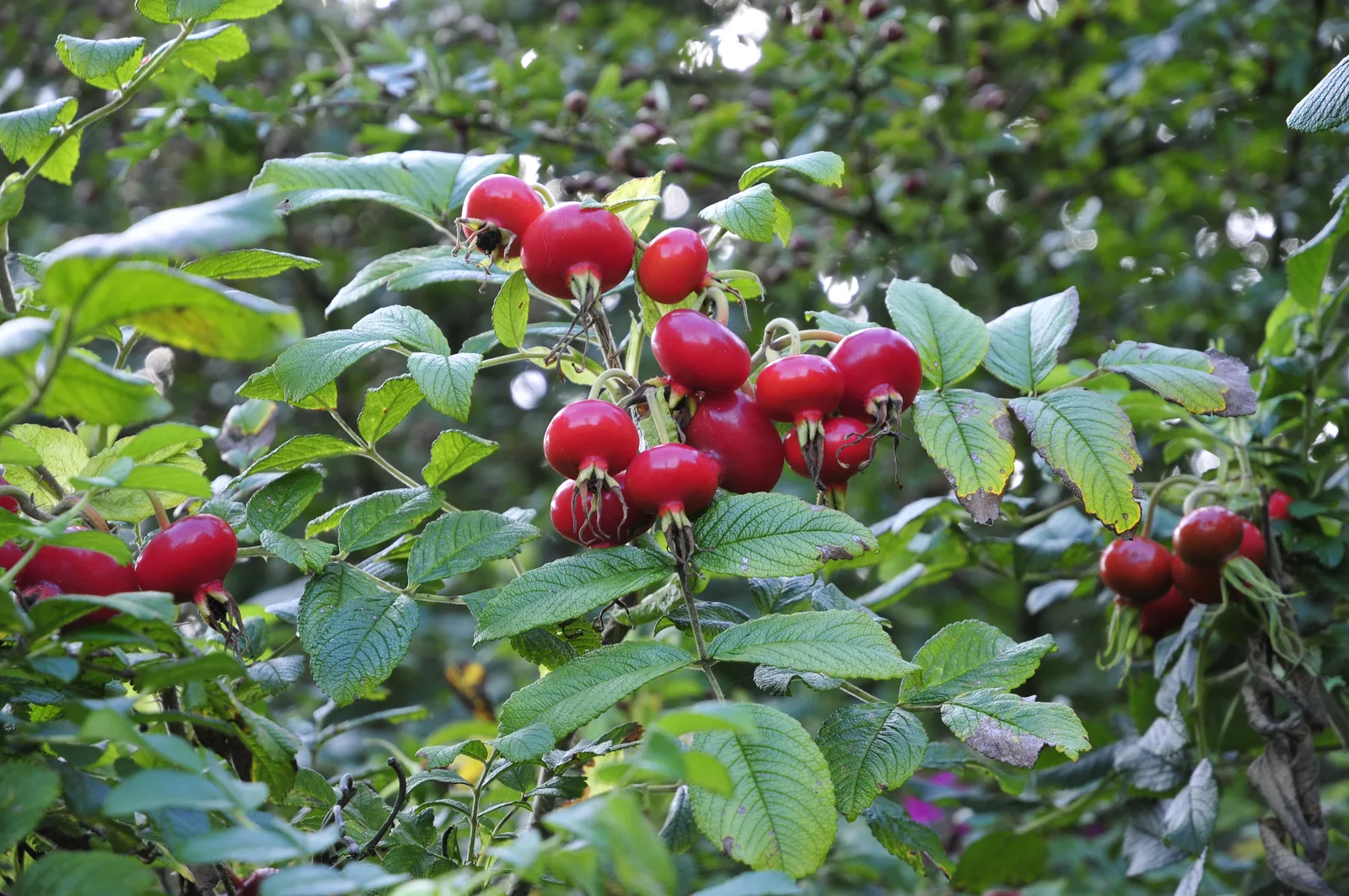
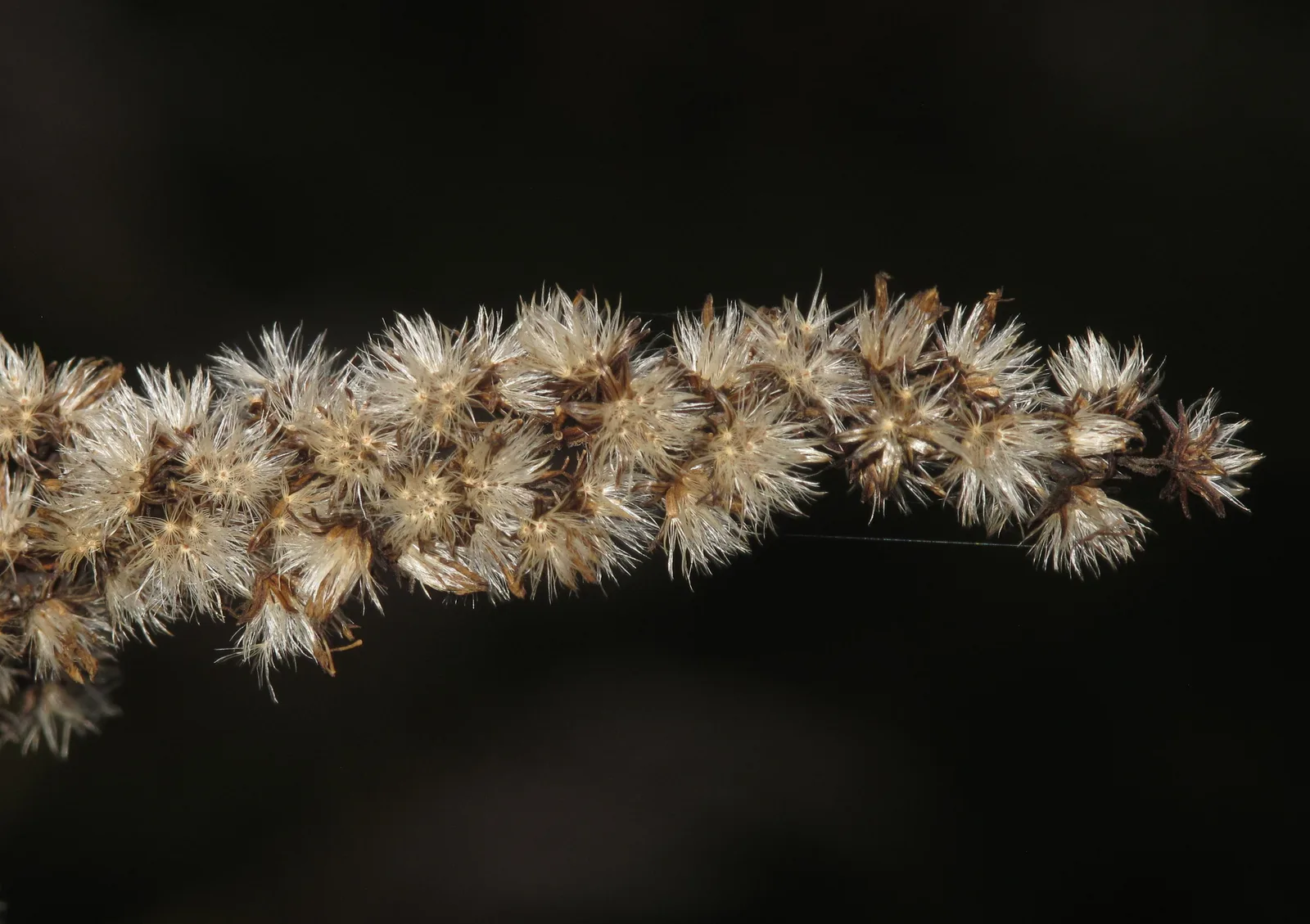
Invasive plants. Several plants that grow in ordinary gardens are on invasive species lists somewhere. In Britain the best known is Japanese knotweed, which counts as controlled waste. In Sweden a new national list has applied since 15 May 2026 and includes Japanese rose (Rosa rugosa), garden lupin and Canada goldenrod, all common in Swedish gardens. In North America, goldenrods are native wildflowers, so this paragraph is not about yours.
Wherever you are, the handling is the same and it is simple:
- Put the plant material in two bin bags, sealed, before you move it anywhere.
- Take it to the tip as general waste for burning, never as garden waste or compost.
- Do not compost it. Seeds and root fragments survive and go out into the garden with the compost.
- Do not burn it in the garden. Sweden's environmental protection agency advises against it outright, because a bonfire or an incinerator bin never gets hot enough all the way through.
Warning: Never tip garden waste in the woods behind the garden. In most countries it counts as fly-tipping or littering whatever it is, and it is the single biggest way invasive plants spread.
Goldenrod in particular is an autumn job where it is invasive. It flowers and sets seed in August and September, and since flowering is driven by day length rather than warmth, that timing moves less from south to north than most things here. Cut the flower heads off while they are still yellow. Once they have turned brown and fluffy, the seed is already out.
Common questions
Is it too late to plant shrubs in October?
It depends on your winter. In a mild climate October is the start of the best planting season. Where winters are cold, early October is the last chance, and where they are long and hard it has passed. The test is simple: if the spade goes in easily and you can water properly, it works. Firm the soil round the root ball extra well, because it is frost heave and not the cold that kills shrubs planted late.
Do I have to rake up all the leaves?
No. Only on the lawn, on paths and paving where they get slippery, and under fruit trees that have had scab. On the borders and under the shrubs they can stay.
Should I mow the lawn when there is frost in the mornings?
Mow in the middle of the day once the frost has gone, never while the grass is frozen, because the blades snap and the lawn goes brown in patches.
Can I burn leaves and prunings in the garden?
Sometimes. It depends on where you live: many councils and municipalities restrict or ban garden bonfires, so read the local rules first. Invasive plants should never be burned in the garden.
How late can I plant tulip bulbs?
As long as the spade goes into the ground. In a mild climate that often means December. Tulips do not need to root before winter, but daffodils do, so those you should have planted four to six weeks before the ground freezes. What to do if the ground has already frozen is in Is it too late to plant tulips?
I have Japanese rose in the garden. Do I have to get rid of it?
In Sweden, no: a private garden owner does not have to dig up an existing plant, but you must stop it spreading beyond your boundary. That is good practice anywhere it is invasive. Cut off the hips before the birds spread the seeds, and keep after the suckers along the boundary.
What happens if I don't get round to all this?
Nothing disastrous, as long as you got the dahlia tubers in and drained the hose. Those two cost money to miss. The rest can be made up in spring, and a garden left untidy over winter has more bumblebees and hedgehogs when the warmth comes than the one next door.
Sources
Frost and timing
- SMHI (Swedish Meteorological and Hydrological Institute), Den första höstfrosten håller tidtabellen. In Swedish. Normal dates for the first autumn frost across Sweden, 1991-2020.
- Royal Horticultural Society, Trees and shrubs: planting. October to April as the best planting time, and no planting in frozen or waterlogged soil.
Pruning and fruit
- Royal Horticultural Society, Apples and pears: winter pruning. Winter pruning while the tree is dormant, November to early March.
- Royal Horticultural Society, Silver leaf. Spores active from September to May, and pruning susceptible trees in summer.
- Blomsterlandet, Skydda dina fruktträd från ohyra och svampsjukdomar. In Swedish. Brown rot in fruit mummies and apple scab in fallen leaves.
- Plantagen, JAS-beskärning. In Swedish. The July to September pruning window and why cuts made after leaf fall heal badly.
Autumn clearing, perennials and leaves
- Riksförbundet Svensk Trädgård, Höststäda lagom. In Swedish. Why perennials should stay standing, the 5 to 10 centimetre stubble, and what has to go when there is disease.
- Husqvarna, Mulching med gräs och löv. In Swedish. A soil temperature of 6 °C as the limit for shredded leaves breaking down.
Lawn, planting and winter damage
- Royal Horticultural Society, Fusarium patch and snow mould. The fungus behind both, and avoiding high-nitrogen feed in late summer and autumn.
- Royal Horticultural Society, Wind scorch. Evergreens drying out in winter because they cannot take up water from frozen soil.
- Royal Horticultural Society, Overwintering tender plants: lifting or mulching. Leaving dahlias in the ground under a thick mulch in milder areas, and lifting them at the first frost elsewhere.
- Granngården, Odla vitlök på hösten. In Swedish. Soil around 8 °C for garlic, and planting times north and south.
- Granngården, Övervintra dahlia. In Swedish. Lifting after the first frost and storage at 4 to 6 °C.
- Odla.nu, Att kupa rosorna. In Swedish. Why hilling should wait until the soil surface has frozen, and why peat is the wrong material.
Garden waste and invasive plants
- Naturvårdsverket (Swedish Environmental Protection Agency), Förbjudna invasiva främmande arter. In Swedish. The EU list and the Swedish national list in force since 15 May 2026.
- Naturvårdsverket, Säker hantering av växtdelar. In Swedish. Double bags, disposal for burning, and why burning in the garden is advised against.
The frost table is our own synthesis. The Swedish rows are read off SMHI's normal map and translated into climates by how long and how hard the ground freezes, so read them as orientation, not as a verdict on your own garden. Where a timing in the text is worked out from the frost date, such as the planting window for shrubs, the working is ours too.