When should you plant bulbs?
Spring bulbs go in between late summer and the day your ground freezes, and the thing most people get wrong is the order. Daffodils and the small early bulbs go in first, at least four to six weeks before the ground freezes, because they need to grow roots before winter. Tulips go in last, once the soil has cooled below 10 °C (50 °F), and you can keep planting them for as long as a spade goes into the ground. In a mild, wet climate like most of Britain that can mean December. In a garden where winter is long and hard, it means the end of September.
A word on where this comes from. Gardian is a Swedish garden app, and this advice was worked out where winters are long and the ground freezes solid. That turns out to be useful well beyond Sweden. If your winters are milder, everything below still holds, you simply get more time.
How late can you plant bulbs?
As long as you can get a spade into the soil, with one exception for the bulbs that need roots.
Tulips can sit through winter without rooting first. Daffodils, snowdrops, winter aconites and most small bulbs cannot. They need four to six weeks in the ground before it freezes, and if they go in too late they come up weak the first spring. So if you have both daffodils and tulips waiting in the shed, plant the daffodils now and the tulips when you get round to it. That is the priority people get backwards.
When your ground freezes depends on your winter. The dates below are rough and assume a normal year. A mild autumn pushes the tulip deadline weeks later.
| Your winter | Daffodils and small bulbs, by | Tulips, by |
|---|---|---|
| Mild and wet, the ground rarely freezes (most of Britain and Ireland, coastal western Europe, the Pacific Northwest) | end of September, though October still works | November, and into December while the soil is workable |
| Cold, the ground freezes for weeks (southern Scandinavia, central and eastern Europe, the US Northeast and Midwest, southern Canada) | late September to early October | late October to mid-November |
| Long and hard, the ground freezes for months (northern Scandinavia and Finland, much of Canada, the mountains) | mid-August to early September | late September to mid-October |
In the southern hemisphere, add six months to every date in this article.
The simplest local signal is your average first frost date, which any weather service or seed catalogue will give you. Treat it as the deadline for the daffodil column. The ground freezes a few weeks after the air does, so the first frosty night is a warning, not the end for your tulips.
Hardiness zones are a blunt tool for this. A USDA zone, or any map like it, tells you how cold your winter gets, which decides whether a plant survives. It does not tell you when your soil freezes. Nearly every spring bulb on sale is hardy far colder than most gardens get, so the zone says little about whether the bulb lives and a lot about how much time you have.
If your winter never really gets cold, as in the southern United States, this calendar is not yours. Tulips need 12 to 16 weeks at 4 to 7 °C (40 to 45 °F) before they will flower, so in warm climates they go in the fridge for that time and get planted in early winter.
If you are holding a bag of tulips past the date in the table, or the frost came before you did, the whole answer is in Is it too late to plant tulips?
Have the bulbs in the shop been sitting too long?
Spring bulbs arrive in the shops at the end of August, so by October they have been on the shelf for a month or more. Tulips and daffodils take it. Snowdrops and winter aconites do not: they dry out in the bag and get worse every week they sit there.
Squeeze them before you buy. A bulb that is hard and heavy is good. One that is light and shrivelled, or has grey mould on the skin, goes back on the shelf. Snowdrops are better bought green in March, just after flowering, in a pot, because then they nearly always come back.
How deep should bulbs go?
Two to three times the bulb's own height, measured from the base of the bulb to the surface. The RHS example: a bulb 5 cm (2 in) tall goes 10 to 15 cm (4 to 6 in) deep. Where winters are cold, aim for the deeper end.
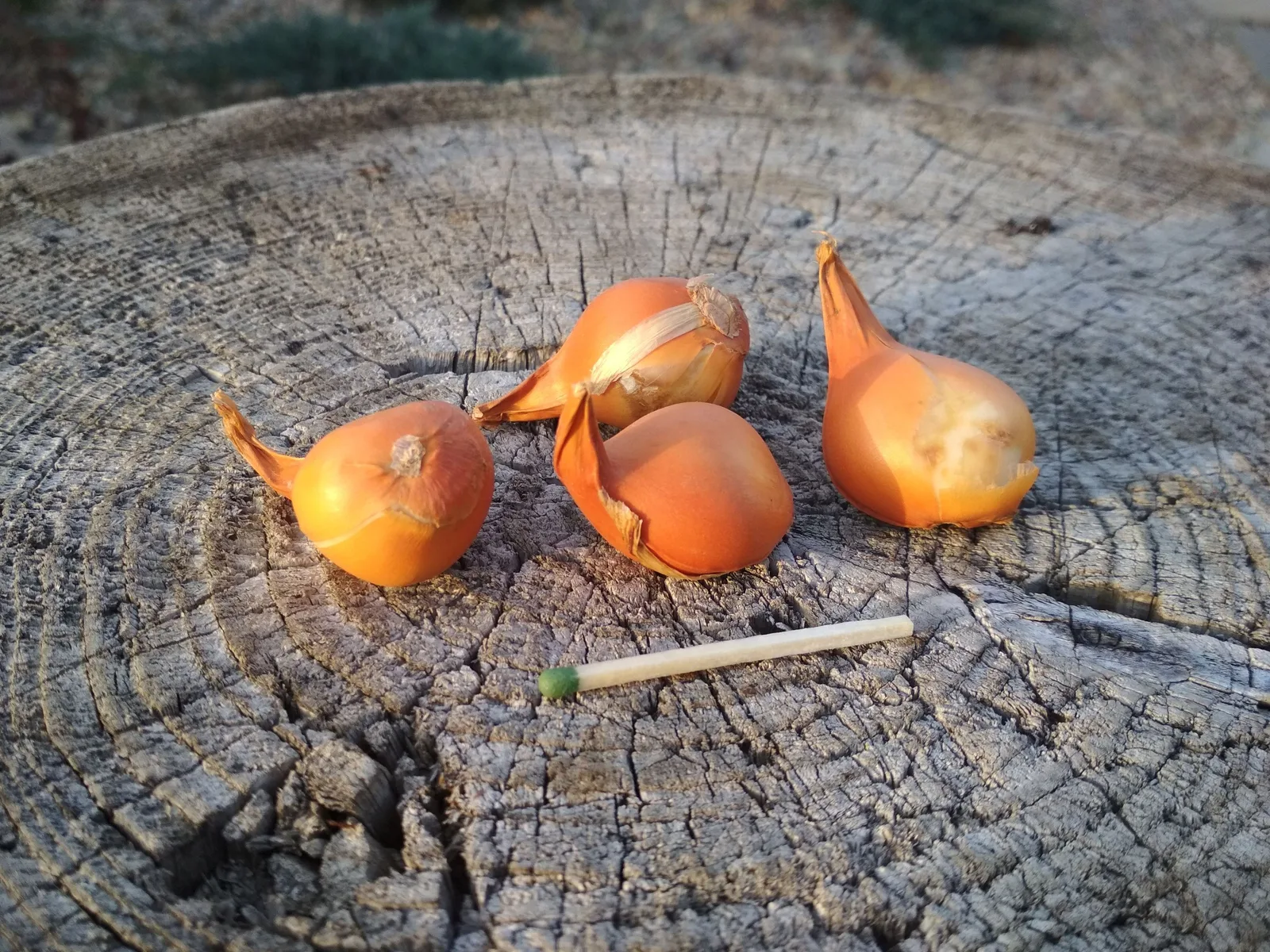
The rule works because the size of the bulb already tells you what it needs. Big bulbs carry more food, send up heavier stems and need the depth to stand against the wind. Small bulbs do not have the strength to push up through 15 cm of soil.
Depth matters more in a cold garden than a mild one. Where the ground freezes and thaws through the winter, frost heaves shallow bulbs up towards the surface. Plant deep, and spread a layer of leaves over the bed when the ground starts to freeze. The leaves insulate against bare frost and keep the bulb where you put it.
A tubular bulb planter is handy in light, sandy soil and close to useless in clay. In clay the plug sticks in the tube and you end up poking it out for every bulb. Dig one hole instead, 30 by 30 cm (a foot square), set seven or nine bulbs in it and fill it back in. It is faster, and a cluster looks better than a row.
Allow about 50 tulip bulbs per square metre for a dense bed. A square metre takes a good hour if the soil is kind and a lot longer if it is not.
Depth and spacing, bulb by bulb
Depth is from the base of the bulb to the surface. The planting months are for a cold-winter garden, the middle row of the table above. In a mild-winter garden they hold or run later. Where winters are long and hard, move everything two to four weeks earlier.
| Bulb | Depth | Spacing | Plant | Flowers | Worth knowing |
|---|---|---|---|---|---|
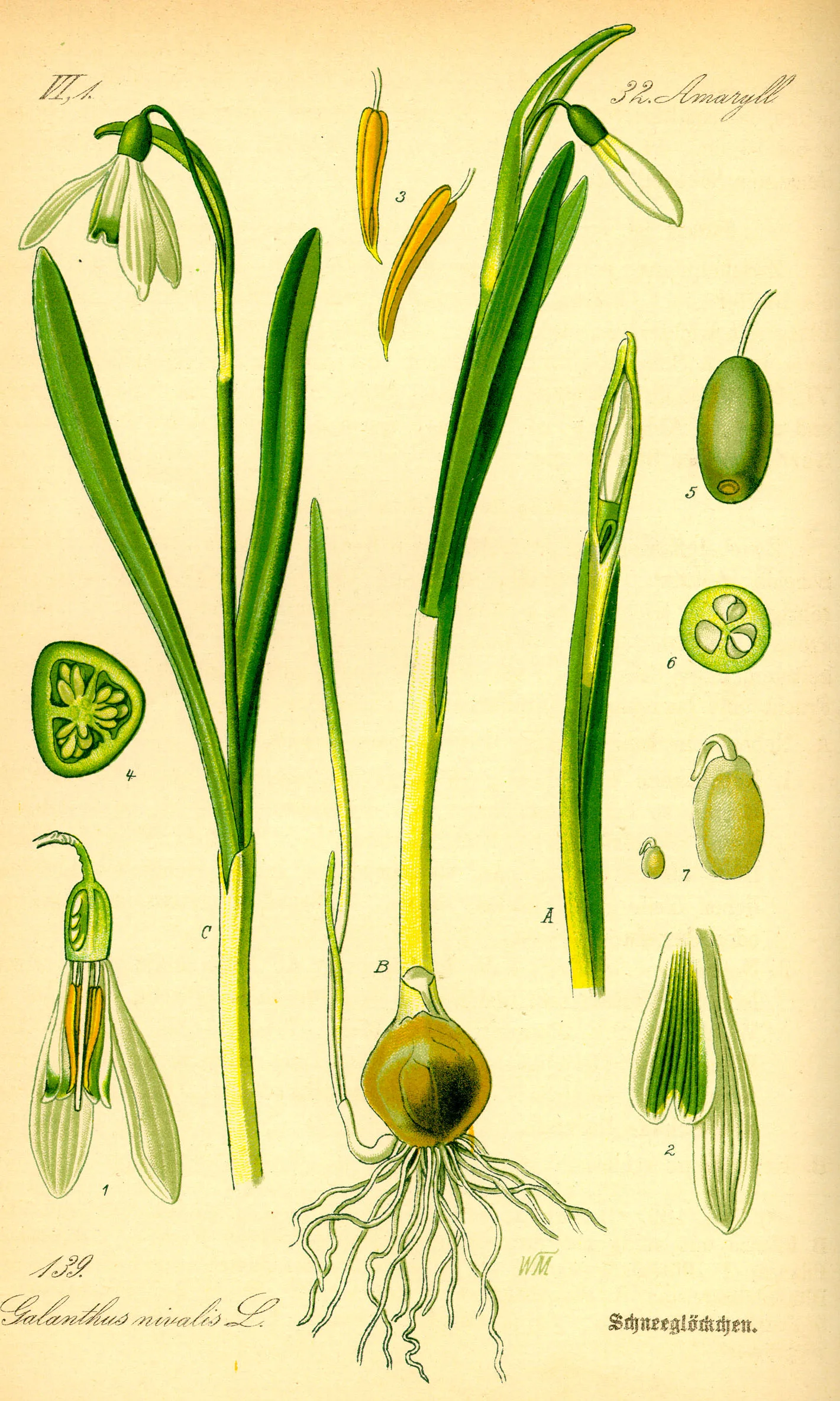
| Snowdrop (Galanthus nivalis) | 6-8 cm (2½-3 in) | 5-8 cm | Aug-Sep | late winter | Dries out fast in the bag. Soak for a day before planting, or buy in the green in spring. |
| Winter aconite (Eranthis hyemalis) | 5 cm (2 in) | 5-8 cm | Aug-Sep | late winter | The tubers are hard as gravel when you buy them. Soak for a day, or half never come up. |
| Spring snowflake (Leucojum vernum) | 8-10 cm (3-4 in) | 10 cm | Sep | early spring | Wants soil that stays moist. Thrives under shrubs where tulips rot. |
| Early crocus (Crocus tommasinianus) | 5-8 cm (2-3 in) | 5-8 cm | Sep-Oct | early spring | Naturalises readily in grass and spreads by seed. Voles and squirrels love it. |
| Dutch crocus (Crocus vernus) | 8-10 cm (3-4 in) | 8-10 cm | Sep-Oct | early spring | Bigger flower, shorter life in a lawn than the early crocus. |
| Siberian squill (Scilla siberica) | 8 cm (3 in) | 5-8 cm | Sep-Nov | mid-spring | Seeds itself hard. Keep it out of any bed you want to keep tidy, and see the note on invasiveness below. |
| Glory-of-the-snow (Scilla forbesii, sold as Chionodoxa) | 8 cm (3 in) | 5-8 cm | Sep-Oct | early spring | Takes part shade better than most small bulbs. Forms carpets over the years. |
| Grape hyacinth (Muscari armeniacum) | 8-10 cm (3-4 in) | 5-8 cm | Sep-Oct | mid-spring | Sends up leaves in autumn. That is normal and does not hurt the flowers. |
| Hyacinth (Hyacinthus orientalis) | 12-15 cm (5-6 in) | 15 cm | Oct-Nov | mid-spring | The skins contain calcium oxalate and make your hands itch. Wear gloves. |
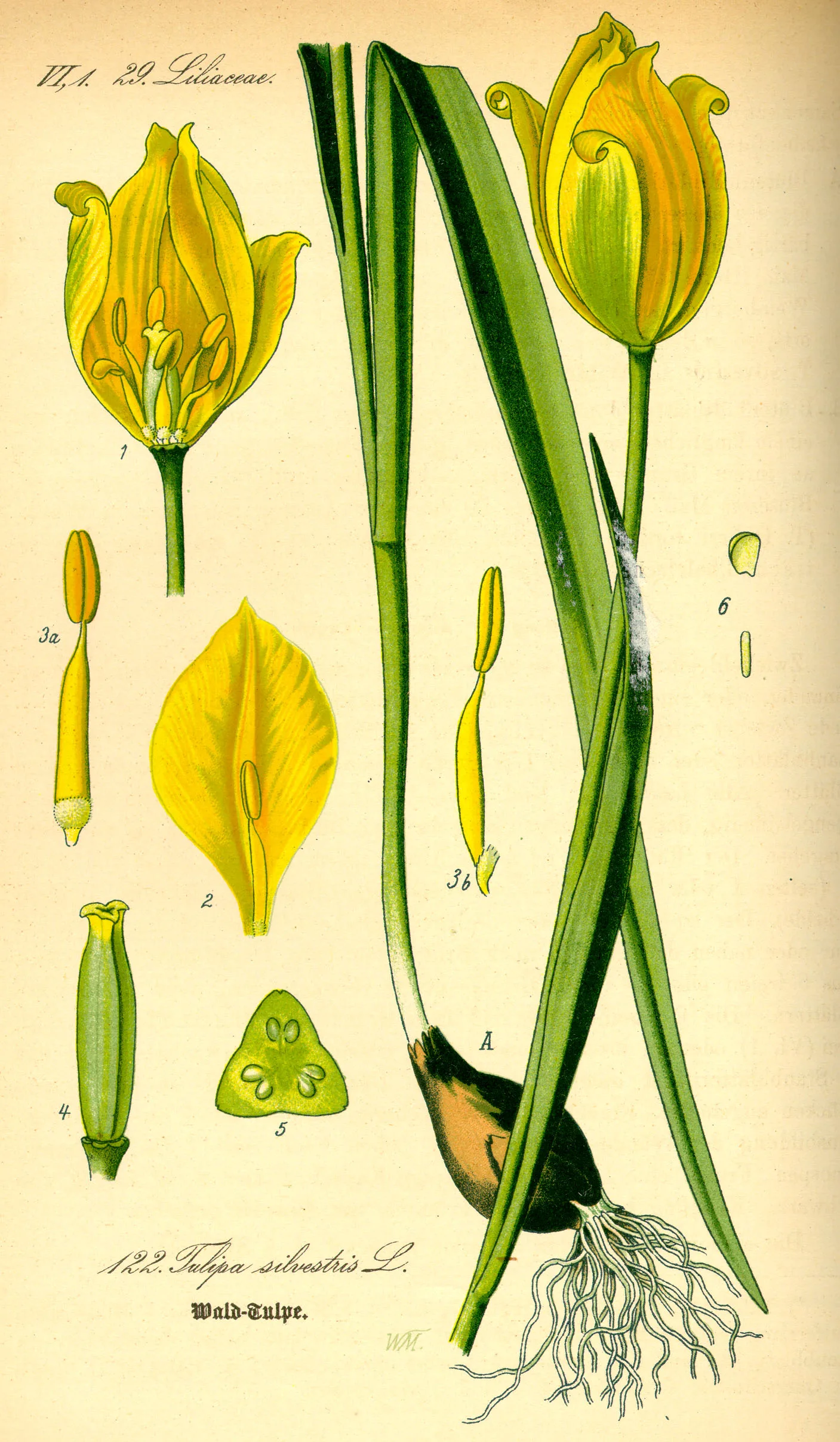
| Species tulip (Tulipa tarda, T. humilis, T. turkestanica) | 8-12 cm (3-5 in) | 8-10 cm | Oct | mid-spring | The tulip that actually comes back. Short, early, happy with a dry summer rest. |
| Large tulip, Darwin and Triumph | 15-20 cm (6-8 in) | 10-12 cm | Oct-Nov | mid to late spring | The big tulips most likely to flower a second year. |
| Lily-flowered and parrot tulip | 15-20 cm (6-8 in) | 10-12 cm | Oct-Nov | late spring | Heavily bred. Expect one season and buy new. |
| Daffodil (Narcissus pseudonarcissus) | 15-18 cm (6-7 in) | 10-15 cm | Sep-Oct | mid-spring | Voles, squirrels and deer leave it alone. Let the leaves stand until early summer. |
| Pheasant's eye (Narcissus poeticus) | 15-18 cm (6-7 in) | 10-15 cm | Sep-Oct | late spring | Flowers three weeks after the daffodils and smells strongly. Good in a meadow. |
| Snake's head fritillary (Fritillaria meleagris) | 7-10 cm (3-4 in) | 7-10 cm | Aug-Oct | late spring | The exception to the drainage rule. Wants soil that is wet in spring and copes with heavy clay. |
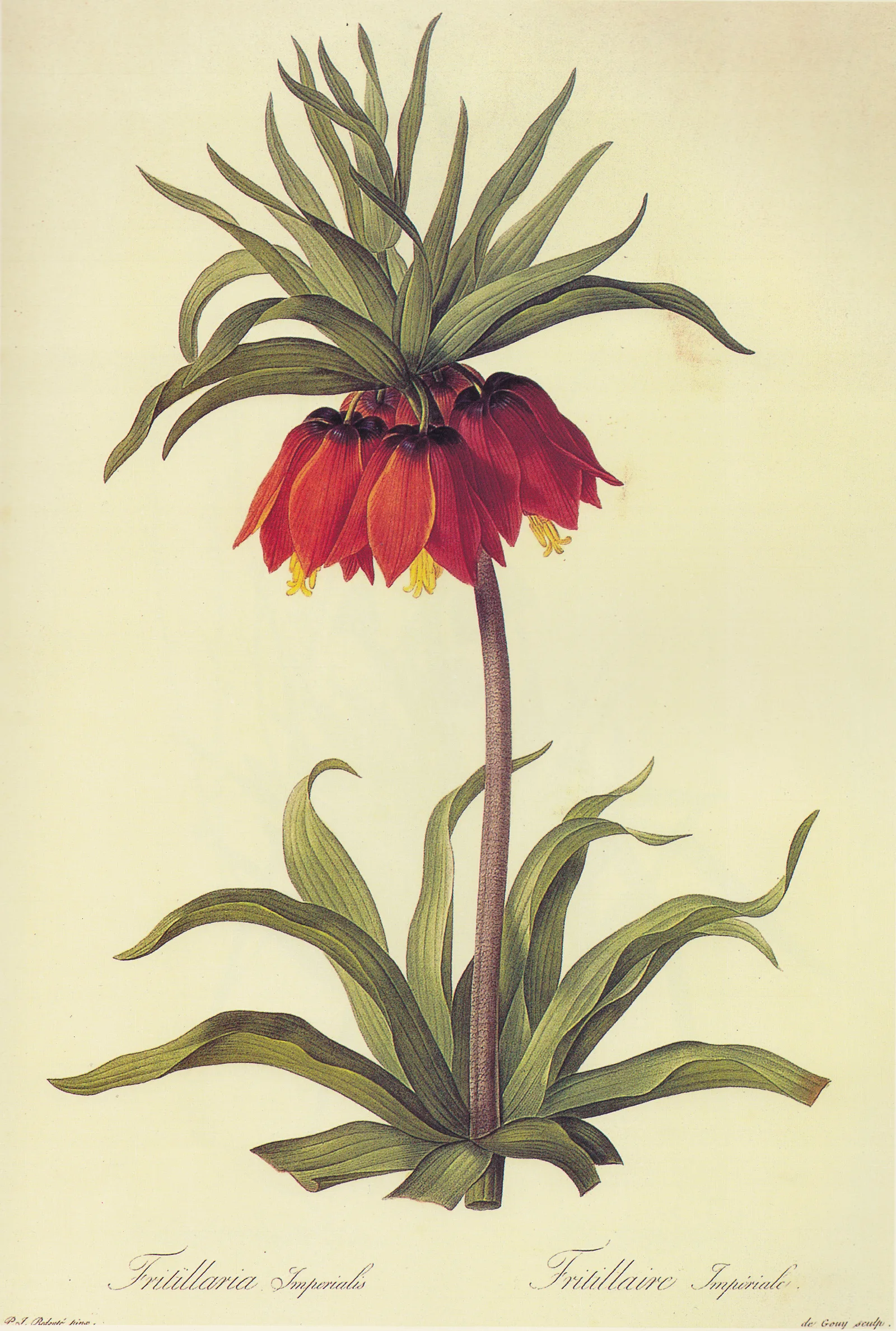
| Crown imperial (Fritillaria imperialis) | 20-25 cm (8-10 in) | 30 cm | Sep-Oct | late spring | Lay the bulb on its side. The top is hollow and otherwise collects water that rots it. |
| Large allium (Allium 'Globemaster', A. hollandicum) | 15-20 cm (6-8 in) | 15-20 cm | Sep-Oct | early summer | The leaves wither just as the ball opens. Plant it behind a perennial that hides them. |
| Small allium (A. moly, A. sphaerocephalon) | 8-10 cm (3-4 in) | 8-10 cm | Sep-Oct | early to midsummer | Plant in groups of at least ten, or you will not see it. |
| Camassia | 10-15 cm (4-6 in) | 12-15 cm | Sep-Oct | late spring | Takes heavier, wetter soil than tulips. Long-lived in grass. |
| Lily (Lilium, Asiatic and Oriental) | 20 cm (8 in) | 20-30 cm | Sep-Oct | summer | A scaly bulb with no protective skin. Must never dry out. Plant it the day you buy it. |
| Martagon lily (Lilium martagon) | 15 cm (6 in) | 25-30 cm | Sep-Oct | early to midsummer | Hardy a long way north and happy in part shade. Takes two years to get going. |
| Madonna lily (Lilium candidum) | 2-3 cm (1 in) | 30 cm | Aug-Sep | early to midsummer | Planted almost at the surface, the opposite of every other lily. Deep planting kills it. |
Missed the month in the table? It is rarely too late. The early small bulbs come up weaker the first year if planted late, but most of them come up. Lilies and the Madonna lily are the exceptions: they have no skin to protect them and cannot sit in a bag until November.
Which bulbs come back next year?
Fewer than you hope, and it is the most common disappointment of the bulb year.
A tulip bulb never flowers two years running. It spends itself on the flower you see in spring and builds offsets underground instead. Next spring it is the offsets that come up, and if they have grown big enough you get flowers. If not, you get leaves. That is the whole explanation for "just leaves the second year", and it is not something you did wrong.
The more highly bred the tulip, the less the offsets can manage. Parrot and fringed tulips are in practice annuals in most gardens. The Darwin and Triumph groups do better, and varieties like 'Purissima' and 'Red Impression' often come back for several years.
If you want tulips that really stay, buy species tulips.
Tulipa tarda and T. humilis are short and flower early, and they multiply instead of fading away. Daffodils, crocuses, grape hyacinths, squills and snowdrops are on the same side. They only get more every year. A clump of daffodils can stand untouched for fifteen years before it gets so crowded that flowering drops off, and then you divide it in early summer, once the leaves have died down.
The best thing you can do for the big tulips is to plant them deep. 18 cm instead of 12 cm gives more returning flowers, because the bulb then splits into fewer, stronger offsets instead of many small ones. Snap off the dead flower before it sets seed, and let the leaves stand until they have turned completely yellow.
What about voles, mice and squirrels?
Which one you have depends on where you live. In Scandinavia it is mostly voles and mice, which eat tulip, crocus and lily bulbs underground in winter while you see nothing. You find out in April, when half the row never comes up. In Britain and North America, squirrels are the usual culprits, and the RHS names tulips and crocuses as their favourites. They dig bulbs up within days of planting, often the same night. In North America, chipmunks and deer join in, and deer take the tulip shoots in spring.
The only protection that holds is physical, and it works against all of them. Lay a piece of fine wire mesh or chicken wire over the planting before you fill in the last of the soil, and push the edges down so nothing can get in from the side. The mesh goes over the bulbs, not around them, and the shoots find their way through it easily in spring.
There is also an easier way. Daffodils, crown imperials and alliums are poisonous or foul-tasting, and voles, squirrels and deer leave them alone. A ring of daffodils around a group of tulips cuts the damage noticeably. It is no guarantee, but it costs nothing extra and it looks good in spring.
The crown imperial bulb smells of fox when you handle it. The smell stays on your hands all evening, and it is said to be half the reason voles keep away.
Can you plant bulbs in a lawn?
Yes, and it is where the small bulbs do best. Snowdrops, early crocuses, winter aconites and squills naturalise in grass and multiply every year.
The method that works: cut a flap of turf with a spade, fold it back like a lid, drop the bulbs in clusters on the soil underneath and fold the turf back down. Throw a handful and plant them where they land, because straight rows in a lawn look contrived in March.
You pay for it in early summer. You cannot mow the grass where bulbs grow until their leaves have yellowed completely, and for daffodils that takes six to eight weeks after flowering. Mow earlier and the bulb does not get its food back, and the flowers fail the next year. With daffodils in the lawn, that patch is shaggy for most of late spring.
Choose early crocuses instead and the problem nearly disappears. Their leaves are done by mid-spring, when the lawn has barely had its first cut.
Skip: Hunting for the perfect bulb planter. In a lawn or in clay, an ordinary spade does the job faster.
Bulbs in pots on the balcony
A bulb in a pot freezes harder than a bulb in the ground, because the volume of soil is small and the cold gets in from every side. Stand the pot close against a house wall, ideally under a roof, and pack leaves around it. A frost-proof pot in glazed ceramic or plastic will survive. Terracotta cracks.
A bulb lasagne gives the most back per pot. Take a pot at least 30 cm (12 in) deep, put 10 cm of compost in the bottom, set the biggest bulbs there, cover with 5 cm of compost and add the next layer. From the bottom up the order is allium, daffodil, tulip, and crocus and grape hyacinth on top. The bulbs find their way past each other on the way up, and the pot flowers from early spring to early summer instead of for two weeks.
Water once after planting and then hardly at all until spring. Wet compost combined with cold is what kills bulbs in pots, not the cold on its own.
What do you do after flowering?
Snap off the fading flower, leave the leaves alone.
The leaves are what charges the bulb for next year. As long as they are green they are working, and next spring's flower is built inside the bulb in the weeks after flowering. Tying daffodil leaves into a neat knot, which used to be fashionable, cuts the leaf area and does exactly the wrong thing.
Feed with bone meal or a slow-release fertiliser once flowering is over. That is when the bulb builds next season. Feeding at planting in autumn does less than most people think, because the bulb already carries everything it needs for its first spring.
Tulips do not like standing in the same soil year after year. Botrytis tulipae, tulip fire, builds up in the ground and gives distorted shoots with brown edges and grey fuzz. It attacks only tulips, so move the tulip bed and grow something else in that spot for at least three years. If you find affected plants, dig them up bulb and all and put them in the household rubbish, not the compost.
Are any of these bulbs a problem plant?
In Europe, no. None of the spring bulbs sold in garden centres is on the EU list of invasive alien species.
Siberian squill is the one to think about. In a Swedish garden it is just a nuisance that seeds itself into every damp bed within a few years. In parts of North America it is worse. It has escaped into woodland across the upper Midwest, and in Minnesota, where it has spread through the eastern counties, botanists flag it as invasive and ask gardeners to stop planting it. If you garden there, choose glory-of-the-snow or grape hyacinths for the same blue.
Common questions
Can I plant tulip bulbs in November?
Yes, as long as the spade goes into the soil. In a mild climate November is the normal month for tulips, and the RHS recommends it. Where winters are long and hard the ground has usually frozen by then. What to do when the frost has already come is in Is it too late to plant tulips?
Why did I get leaves and no flowers?
The bulb you planted flowered once and then built offsets. They came up this year but were too small to make a bud. It happens most with highly bred big tulips and almost never with daffodils or crocuses. Plant deeper next time, 18 cm instead of 12 cm, and snap off the dead flowers before they set seed.
Does the bulb have to go in pointy end up?
In theory yes, in practice it hardly matters. The shoot turns itself round if the bulb lands crooked, and it only costs a few days. The exception is the crown imperial, which you lay on its side on purpose so water does not collect in its hollow top.
How many bulbs do I need?
About 50 tulip bulbs per square metre for a dense bed, half that if you mix them with perennials. For small bulbs like crocuses and squills, think a hundred per square metre, and they still look sparse the first year.
I have a bag of bulbs left from last autumn. Can I still plant them?
Squeeze them. A bulb that is hard and heavy goes in without a second thought. One that is light, soft or grey with mould goes in the bin. Snowdrops and winter aconites never survive a year in a bag, while tulips sometimes do.
Can I keep bulbs in the fridge until I have time to plant them?
Yes, in a paper bag in the salad drawer, but never next to apples or pears. The fruit gives off ethylene, which damages the flower bud inside the bulb. A couple of weeks is no problem, a whole autumn is.
Do bulbs really need a cold spell?
Yes. Tulips need 12 to 16 weeks at around 4 to 7 °C (40 to 45 °F) before the flower develops. That is the whole reason bulbs are planted in autumn instead of spring. If you want hyacinths in flower for Christmas, buy prepared bulbs, which have already had their cold.
Sources
Timing, depth and climate
- Royal Horticultural Society, Bulbs: planting. Daffodils and other spring bulbs preferably by the end of September, tulips in November, the depth rule of two to three times the bulb's height, pots, and squirrels as a pest of tulips and crocuses.
- University of Nebraska-Lincoln Extension, Spring Flowering Bulbs. Planting once the soil falls below 60 °F so the roots can develop before the ground freezes.
- University of Illinois Extension, Planting bulbs. Timing and depth for a cold-winter climate.
- Iowa State University Extension, How do you force tulip bulbs indoors?. Tulips need 12 to 16 weeks at 40 to 45 °F.
- SMHI (Swedish Meteorological and Hydrological Institute), Den första höstfrosten håller tidtabellen. In Swedish. Normal dates for the first autumn frost in Sweden, 1991-2020, which the long-winter and cold-winter rows of the table are built on.
Bulb by bulb
- Wexthuset, Planteringsråd för små lökväxter. In Swedish. Depths for the small bulbs, naturalising in grass and when the grass can be mown.
- Wexthuset, Kejsarkrona, odling och fakta. In Swedish. Crown imperial at 20-25 cm, bulb on its side.
- Wexthuset, Kungsängslilja. In Swedish. Snake's head fritillary at 7-10 cm and its need for spring-wet soil.
- Wexthuset, Plantera liljor i kruka och rabatt. In Swedish. Lily depths and the Madonna lily exception.
- Fritidsodlingens riksorganisation, Plantera vårlökar. In Swedish. The depth rule and the warning about dried-out small bulbs.
Returning flowers, care and problems
- Royal Horticultural Society, Tulip fire. The disease, and leaving the spot free of tulips for at least three years.
- Iowa State University Extension, How can I keep squirrels from digging up newly planted tulip bulbs?. Chicken wire or hardware cloth over the bed.
- Nelson Garden, Kommer mina tulpaner blomma nästa år?. In Swedish. Why a tulip bulb does not flower two years running, and what the offsets do.
- Odla.nu, Fleråriga tulpaner. In Swedish. Which tulip groups and varieties actually come back.
- Odla.nu, Skydda trädgården mot sork. In Swedish. Mesh over the planting and the bulbs voles avoid.
- Odla.nu, Plantera narcisser. In Swedish. Six to eight weeks with the leaves left on after flowering.
Problem plants
- Minnesota Wildflowers, Siberian squill. Its spread in Minnesota and the request to stop planting it.
The climate table and the bulb table are our own synthesis from the sources above. The Swedish rows are built on Swedish frost data and translated into climates by how long and how hard the ground freezes, not by measured dates for each country. Where sources disagreed on depth, mostly for the small bulbs, we used the two to three times rule and gave the depth that works in an ordinary garden soil.