Overwintering plants: what comes in, what stays out and how do you do it?
Most plants that die over winter do not freeze to death. They are kept too warm and too wet. A geranium in a living room at 21 °C tries to keep growing on the light a January day gives it, stretches pale shoots towards the window and finally rots in compost that never gets the chance to dry out. The rule you need is simple: the colder a plant stands, the less light and water it needs. The warmer, the more light. Choose the place first. The method follows from it.
Gardian is a Swedish garden app, and in Sweden almost nothing in a pot survives the winter outside, so overwintering is a job every gardener there does every autumn. The rules below hold anywhere. Where winters are mild, more of the list can stay out, and the table says how cold each plant can take.
Why do plants die indoors in winter?
Because warmth and light belong together, and a living room in December has one and not the other. A plant at 20 °C has its metabolism running at full speed. It wants to grow and needs light to do it, but in a south-facing window in December it gets a fraction of what it had on the patio in July. The result is long, thin shoots with small pale leaves. That is what gardeners call leggy.
Drop the temperature to 5 or 10 °C and the plant goes dormant. It almost stands still and gets by on little light. That is why a cold stairwell with one window often beats a warm living room with three.
Water is the other half. A dormant plant takes up hardly any water at all, so the compost stays wet for weeks, the roots suffocate and rot. When the leaves then turn yellow, the owner thinks the plant is thirsty and waters again. Yellow leaves on an overwintering plant nearly always mean too much water, not too little.
Tip: Buy a min-max thermometer and put it where the plants will stand. What you think is 8 °C in the garage can be 3 one night in January and 14 one sunny afternoon in March, and it is those extremes that decide.
When should the plants come in?
The frost decides, not the calendar. Follow the frost forecast where you live and the table below, not a date in a magazine.
| Plant | Takes roughly | Bring in |
|---|---|---|
| Geranium (Pelargonium) | 0 °C, no frost | At the first frost warning |
| Fuchsia in a pot | 0 °C | At the first frost warning |
| Angel's trumpet (Brugmansia) | A few degrees above freezing | When nights drop below 5 °C |
| Citrus | 5 °C | When nights drop below 5 °C |
| Agapanthus, evergreen | minus 5 °C in the ground, less in a pot | At the first frost warning |
| Agapanthus, deciduous | minus 10 °C in the ground with a mulch | Can stay out where winters are mild, otherwise in |
| Oleander | 0 to minus 5 °C | After the first frosty nights |
| Olive tree | minus 5 °C in a pot | When nights approach minus 5 °C |
| Bay (Laurus nobilis) | minus 5 °C in a pot | When nights approach minus 5 °C |
| Dahlia and tuberous begonia | Nothing, the tuber freezes | When frost has blackened the foliage |
The temperatures are for an established plant that has been allowed to cool gradually through the autumn. A young olive in a small pot takes far less than a fifteen-year-old tree in a half barrel, because the roots freeze long before the top is damaged.
Leave the olive and the bay out as long as you dare. The cold in October is what hardens them, and a plant moved straight from a cool patio into a warm room often answers by dropping a large share of its leaves within a couple of weeks. It is not a disease. It is shock.
Three ways to overwinter, and which to choose
Which way works depends on the space you have, not on which method sounds best. If you have a cold conservatory the answer is different from if you live in a flat.
Light and cool, 5 to 12 °C (41 to 54 °F) The best way for almost everything, and the only right one for plants that keep their leaves. Citrus, olive, bay, oleander and evergreen agapanthus must have light, because they keep breathing through their leaves all winter. Citrus does best at 8 to 15 °C, the olive is happy with 2 to 10.
The places that work are an unheated conservatory kept frost-free, a cold greenhouse with a heater, a cold spare room, a stairwell or a cellar with a window. Stand the plants as close to the glass as you can.
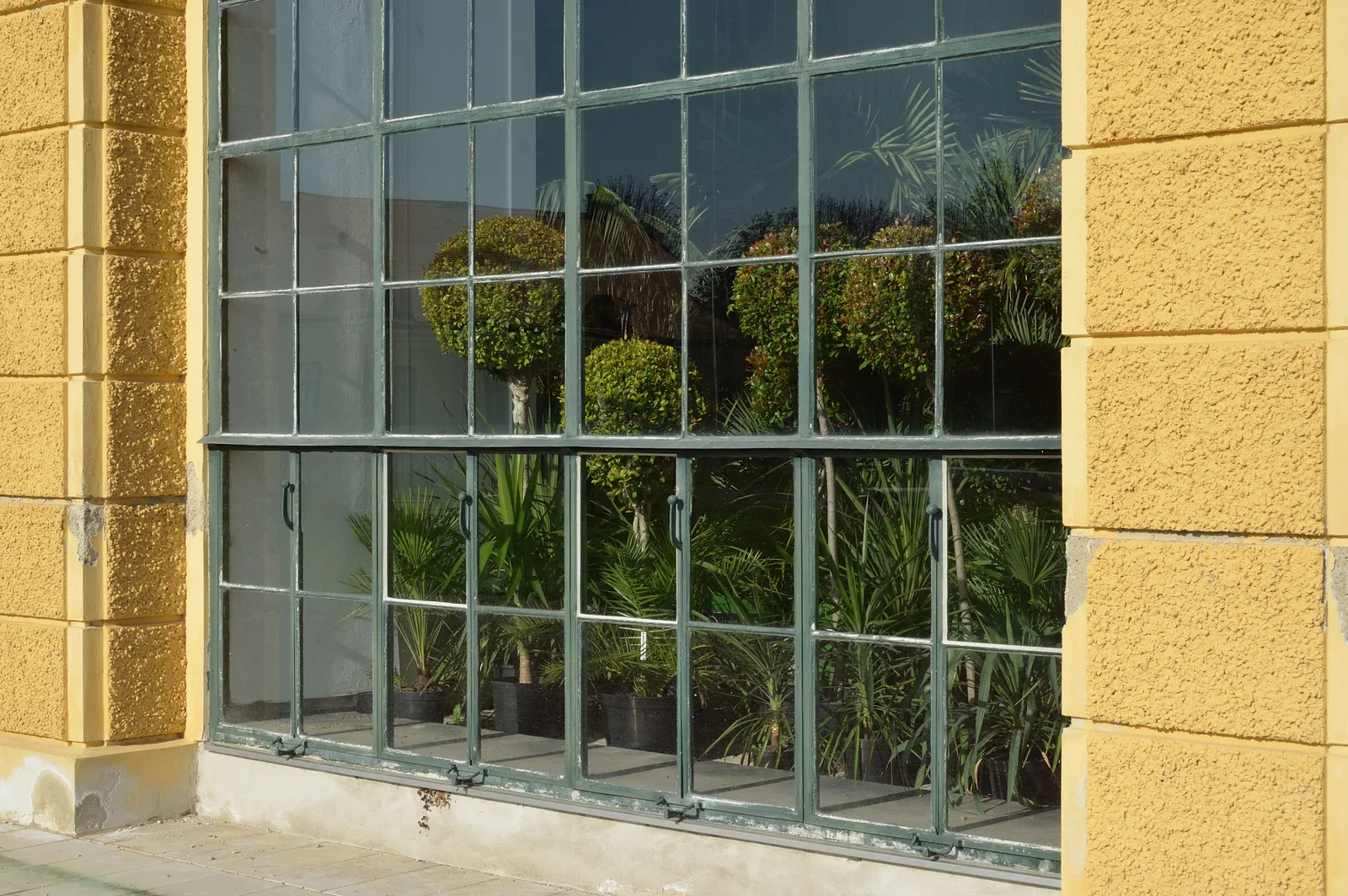
Water sparingly but never let the root ball dry out completely. Push a finger in: if the compost is dry two centimetres down, the plant gets a small drink. Do not feed until the light comes back.
Geraniums and fuchsias are happy here too, and a geranium that has wintered light and cool only needs a light trim in spring.
Tip: Evergreen agapanthus only flowers if it has had a cool rest at 4 to 10 °C. The flower buds form over the winter, so an agapanthus kept warm all year gives leaves but no flowers.
Dark and cool, just above freezing to 8 °C (46 °F) For plants that can lose their leaves: fuchsia, angel's trumpet, geranium, deciduous agapanthus and all tubers. A cellar storeroom, a garage that stays frost-free or a root cellar works.
What decides it is that it is cold enough. In the dark a plant has to rest, and it only rests below about 8 °C. In a warm basement at 15 °C it sends up pale white shoots that drain it, and the plant comes out weaker in spring than if it had been thrown away.
Cut the plants back by about half before they go into the dark, and strip all the leaves off the angel's trumpet. Without light the leaves can do no good, they yellow anyway and go mouldy in the still air. Water hardly at all. The compost should be almost dry, and a cup or so a month is enough for a big pot.
Warning: The garage is the most common place, and it is also where plants freeze to death. A cold snap of minus 20 takes an uninsulated garage below zero in a couple of nights. Check the min-max thermometer after every cold night and bring the plants in for a while if it has shown frost.
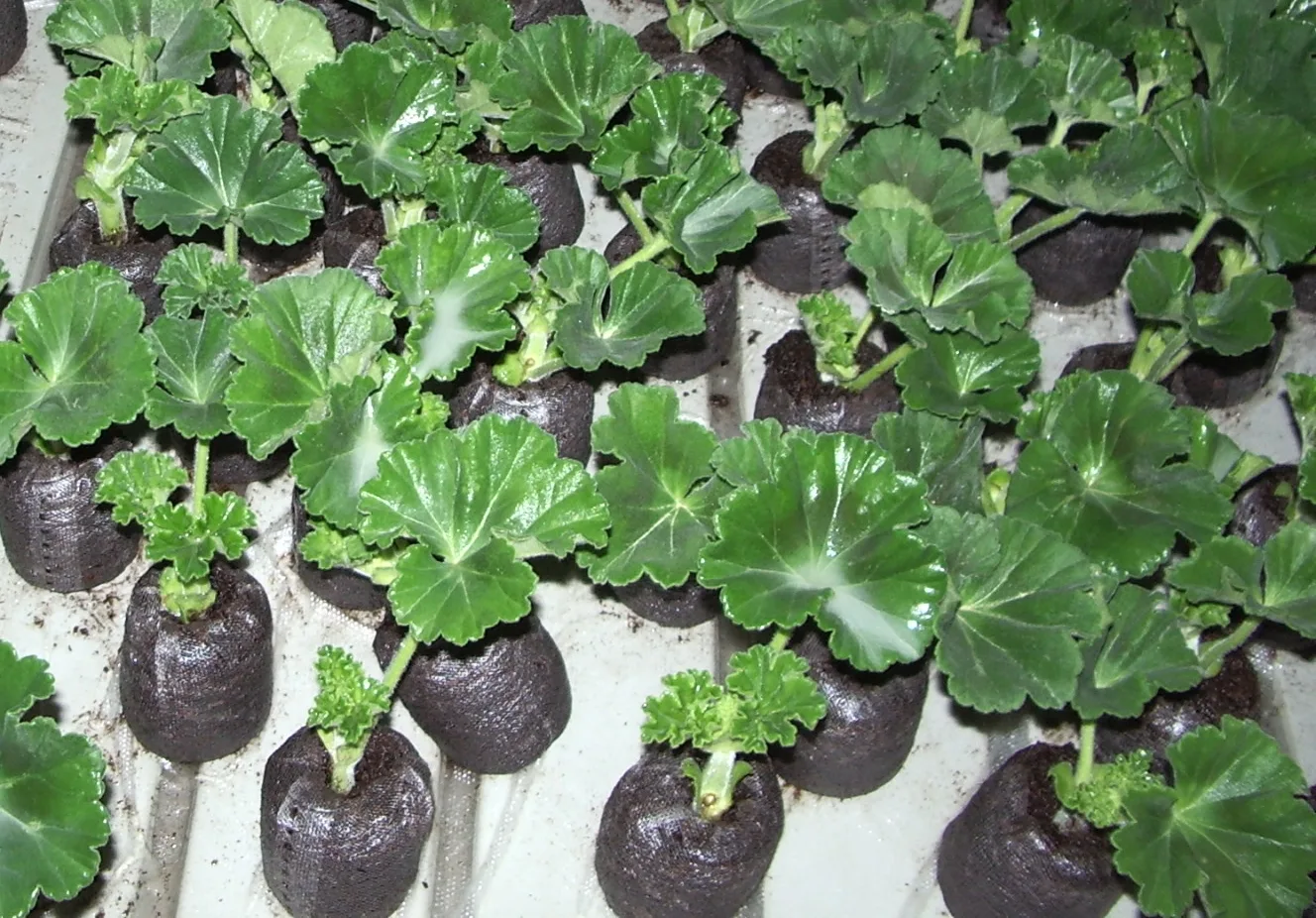
Cuttings only If you have no cool place at all, or the geraniums are many and big, you do not have to save the parent plant. Take tip cuttings of 8 to 12 centimetres, cut just below a leaf joint and strip off all the leaves except the top two or three. Let the cut dry for an hour or two and put the cutting in a pot of seed compost.
No plastic bag over geranium cuttings, even though that is the advice for most other plants. They rot in the damp air. Fuchsias, on the other hand, root happily under plastic or even in a glass of water.
The cuttings root in two to six weeks, and ten of them fit on a windowsill where one old geranium took the whole width. They winter as small plants and are often better than the parent plant by summer. They take best in late summer while the plants are growing hard, but if you take them while the plants are still out before the frost it still works, just more slowly.
If all you have is the living room
It can be done, but then the plants need a grow light. The Swedish garden centre chain Wexthuset reckons on 10 to 11 hours of light a day in autumn, 12 to 13 in January and up to 16 from March, and a January day does not come close. A simple LED grow light on a timer does the job.
Two more things happen at room temperature that do not happen in a cold storeroom. Spider mites thrive in warm, dry air, and you see them first as dull, speckled leaves and then as fine webs between the leaf stalks. Give the plants a lukewarm shower now and then. The other is that citrus drops its leaves if the roots and the top stand at different temperatures. On a cold stone floor the top has room temperature while the roots stand at 16 °C, and the tree answers by dropping leaves. Put the pot on a stool or a plant caddy to get it off the floor.
Do this before the plants move in
Go over every plant outdoors before you carry it in, because whatever you bring in with it multiplies freely in the warmth all winter. Turn the leaves over and look for aphids, spider mites, thrips and scale insects. Scale insects sit like small brown shells along the stems of olive, bay and citrus, and they are easier to scrape off now than when there are a hundred of them.
Pick off the flowers and the yellow leaves. Scrape off the loose top layer of compost if it is full of weeds or moss. Fungus gnats, the small black flies that buzz round the pots a few weeks after they come in, lay their eggs in damp surface compost, and dry compost is the best protection.
That is my own reason for bringing the geraniums in a week before the frost rather than a day before. A cold morning with a frost warning is the wrong time to be turning over leaves with a torch.
The tubers in the box need checking
How to dig up and pack dahlias is in the article on autumn garden jobs. What is rarely mentioned is that the tubers need checking over the winter, and that goes for dahlias, tuberous begonias and canna alike.
Tuberous begonias want to lie in the dark at 5 to 10 °C, in peat-free compost, sand or newspaper that is almost dry but not dusty. Too wet and they rot, and if the air is too dry they shrivel before spring.
Open the box once a month. A tuber that has started to shrivel gets a light mist from a spray bottle or moves somewhere damper. A tuber that has gone soft or smells musty, you cut the rot out of and dust the cut with a little dry compost. Leave it and the rot spreads to the tubers next to it.
The pots that stay outside
A plant in a pot has it colder than the same plant in the ground. Roots in the border are protected by tonnes of soil, but in a pot the whole root ball freezes through from every side. Hardiness zones therefore do not apply straight to pots, and the nurseries' rule of thumb, in Sweden and in the US alike, is to choose plants two zones hardier than where you live. In USDA zone 7, buy plants hardy to zone 5. In a Swedish zone 3, buy plants that take zone 5, since the Swedish scale runs the other way.
It is the pot and the roots you protect, not the top. Here is how, in the order that does the most good:
- Group the pots against the house wall, ideally under the eaves where the rain does not reach. The warmth from the house and the shelter from the wet are worth more than any insulation.
- Lift them off the ground on feet or a sheet of polystyrene, so they do not stand in a puddle that freezes to ice.
- Wrap the pot in bubble wrap with big bubbles, hessian or coir matting. Better still, fill a big cardboard or sack cover round several pots with dry leaves.
- Put leaves or evergreen boughs over the compost. The cold comes from above too.
The material matters. Polystyrene insulates best, wood second, concrete poorly. Unglazed terracotta cracks when the compost freezes and expands, and you only see the crack when you move the pot in spring. The same goes for spring bulbs in pots, and how to plant a bulb lasagne that flowers from early spring to early summer is in the article on when to plant bulbs.
Water evergreens in pots thoroughly before the compost freezes, and check them in a thaw. A box or a pine in a pot dies more often of drought in late winter than of cold in midwinter, because the sun makes the needles lose water while the roots sit in a frozen lump and cannot take any up.
Evergreen boughs or fleece?
They do different things and should not be swapped for each other.
Evergreen boughs, spruce or fir branches laid over the bed, are winter protection. They shade evergreens from the late-winter sun, catch snow that insulates, and let air through so nothing goes mouldy. Lay them over borderline-hardy perennials, round the base of tender shrubs, and over rhododendrons and small conifers in sunny spots. Put on too early, voles nest under them and the plants do not harden off, so wait until the ground has frozen. Take them off gradually in spring once the ground has thawed, ideally on a cloudy day.
Do not cut branches from trees that are not yours. I top up in January with the Christmas tree, which has to go out anyway.
Fleece is frost protection for single nights, and it does most good in autumn and spring. It lets light and air through and gives a few degrees of protection when you lay it over the dahlias on a cold night before the real frost, or over new plantings in spring. It does not stop a pot freezing through in January. Never put plastic directly over a plant. Condensation collects on the inside, freezes to ice against the leaves and lies as a wet film when the sun comes out.
When the plants go out again
Indoors, the light is in charge, not the frost, so the timing is much the same everywhere at the same latitude. Geraniums wake up as the days lengthen in February and March. Repot them in fresh compost, cut leggy plants back to about 10 centimetres and start watering and feeding as they put out new leaves.
They go out only after the last frost, which can be March in a mild climate and well into June where winters are long. Harden them off for one to two weeks first: a few hours outside in the shade, longer each day. Olive and citrus that have been indoors all winter scorch their leaves in full sun the first week, and the scorch marks stay all season.
Common questions
Can you overwinter geraniums in the garage?
Yes, if the garage stays frost-free and below about 8 °C. Cut them back by half, water almost nothing and check the temperature after every cold night. An uninsulated garage goes below zero in a real cold snap.
Can the olive tree stay out all winter?
In a pot, almost never where winters bring real frost, because the roots freeze long before the top is damaged. Planted in the ground in a sheltered spot in a mild climate, an established tree often survives, but expect to lose it in a hard winter. Bring it in when nights approach minus 5 °C.
Why is my lemon tree dropping its leaves in winter?
Most often too much water, too warm for the light it gets, or a different temperature at the roots and the top. If it stands on a cold floor, lift the pot. If it stands warm without a grow light, move it somewhere cooler or give it more light.
Do you have to cut geraniums back before bringing them in?
Not if they will stand in the light. Then it is enough to pick off flowers and yellow leaves. If they will stand in the dark, cut them back by about half, because they will drop their leaves anyway and a smaller plant has less that can go mouldy.
How do you overwinter plants in a flat?
Either with a grow light on a timer, or by finding the coldest spot in the flat: a window in a room where you turn the radiator down, an enclosed balcony that stays frost-free, a cold storeroom in the stairwell. If you have none of those, cuttings are the safest way.
How often should you water plants that are overwintering?
By temperature, not by the calendar. At 5 °C a small splash every three to four weeks, at room temperature when the compost is dry a couple of centimetres down. Tubers in a box are not watered at all.
Sources
Temperature and climate
- SMHI (Swedish Meteorological and Hydrological Institute), first frost and growing season, normal period 1991 to 2020. In Swedish. When the first frost comes across Sweden.
- Royal Horticultural Society, plant pages for Olea europaea and Laurus nobilis. Hardiness rating H4, minus 5 to minus 10 °C for established plants.
- Royal Horticultural Society, Agapanthus. The difference in hardiness between deciduous and evergreen types.
- Garden Crossings, Can I overwinter this hardy plant in a container?. The rule of choosing plants at least two zones hardier for pots.
Overwintering indoors
- Wexthuset, overwintering geraniums. In Swedish. Hours of light per month when overwintering warm, 4 to 8 °C when cool, and watering every three to four weeks.
- Wexthuset, overwintering Mediterranean plants. In Swedish. Temperatures of 5 to 15 °C, 10 to 12 hours of light, and pests to look for before the plants come in.
- Blomsterlandet, overwintering summer patio plants and Mediterranean plants. In Swedish. Which plants need light, which take darkness, and temperatures for olive, bay and citrus.
- Blomsterlandet's Ask the Expert and Gothenburg Botanical Garden. In Swedish. Why citrus drops its leaves, including the temperature difference between roots and top.
- Odla.nu and Fritidsodlingens riksorganisation, tuberous begonia. In Swedish. Storing tubers dark at 5 to 10 °C.
- Vi i Villa and Plantbyrån, geranium cuttings. In Swedish. Length, drying the cut, and why the plastic bag should go.
Pots outside and winter protection
- Wexthuset, 12 tips for overwintering plants in outdoor pots. In Swedish. Pot materials, insulation, placing, and that zones do not apply to pots.
The table of how much cold each plant takes and when it should come in is my own synthesis of the sources above. The temperatures are for established plants and are guides, not limits.