Leaf mould: how to turn autumn leaves into soil
Oak leaves have a reputation for being too tough and too acid to compost. Yet oak, beech and hornbeam make the best leaf mould there is, according to the Royal Horticultural Society. Here is how: put the leaves in a cage of chicken wire or in black bags with holes in them, wet them if they are dry and leave them alone. No turning, no fertiliser, nothing green to mix in. After a year you have mulch for the borders, and after two, fine, crumbly soil to sow seeds in. Run the mower over the leaves first and it goes a good deal faster. (In America the same stuff is called leaf mold. It is the same job.)
A word on where this comes from. Gardian is a Swedish garden app, and this advice was worked out where winters are long and the ground freezes solid. Most leaf mould advice in English comes from England, where a heap rarely freezes. Ours sits frozen from November to April, so where the timings differ, you get both.
Where should the leaves go first?
On the borders. There they protect the roots from frost and turn into soil by next summer without you lifting a finger, and there is more on that in the article on raking leaves off the lawn. Leaf mould is for what is left over once the borders have had their share, and for anyone who wants their own seed compost in two years. If you have big trees, a lot is left over.
Why shouldn't the leaves go in the ordinary compost?
An ordinary compost heap is driven by bacteria, and bacteria want nitrogen. They get it from grass clippings and kitchen scraps, and as they work the heap warms up. Leaves contain almost no nitrogen. A heap made mostly of leaves just sits there. Sweden's allotment federation tells anyone with a heap like that to mix in chicken manure or fresh grass clippings to get it going.
Leaf mould works in a completely different way. Fungi break the leaves down, slowly and without heat, and all they need is leaves and moisture. So the leaf heap stands on its own, in the shade if possible, and gets left alone.
That does not mean leaves have no place in the ordinary compost. Quite the opposite. Kitchen waste should be covered with something dry and carbon-rich every time you empty the caddy, roughly one part dry material to three or four parts food waste, according to the Swedish waste company SÖRAB. With too little, the heap smells of ammonia and the nitrogen disappears into the air.
Tip: Fill a couple of bags with dry leaves now and keep them under cover, or in a bin with a lid next to the compost. In June, when the grass clippings arrive by the barrow-load and the compost starts to smell, those bags are what you will be missing.
How do you make leaf mould?
There are two ways, and both work.
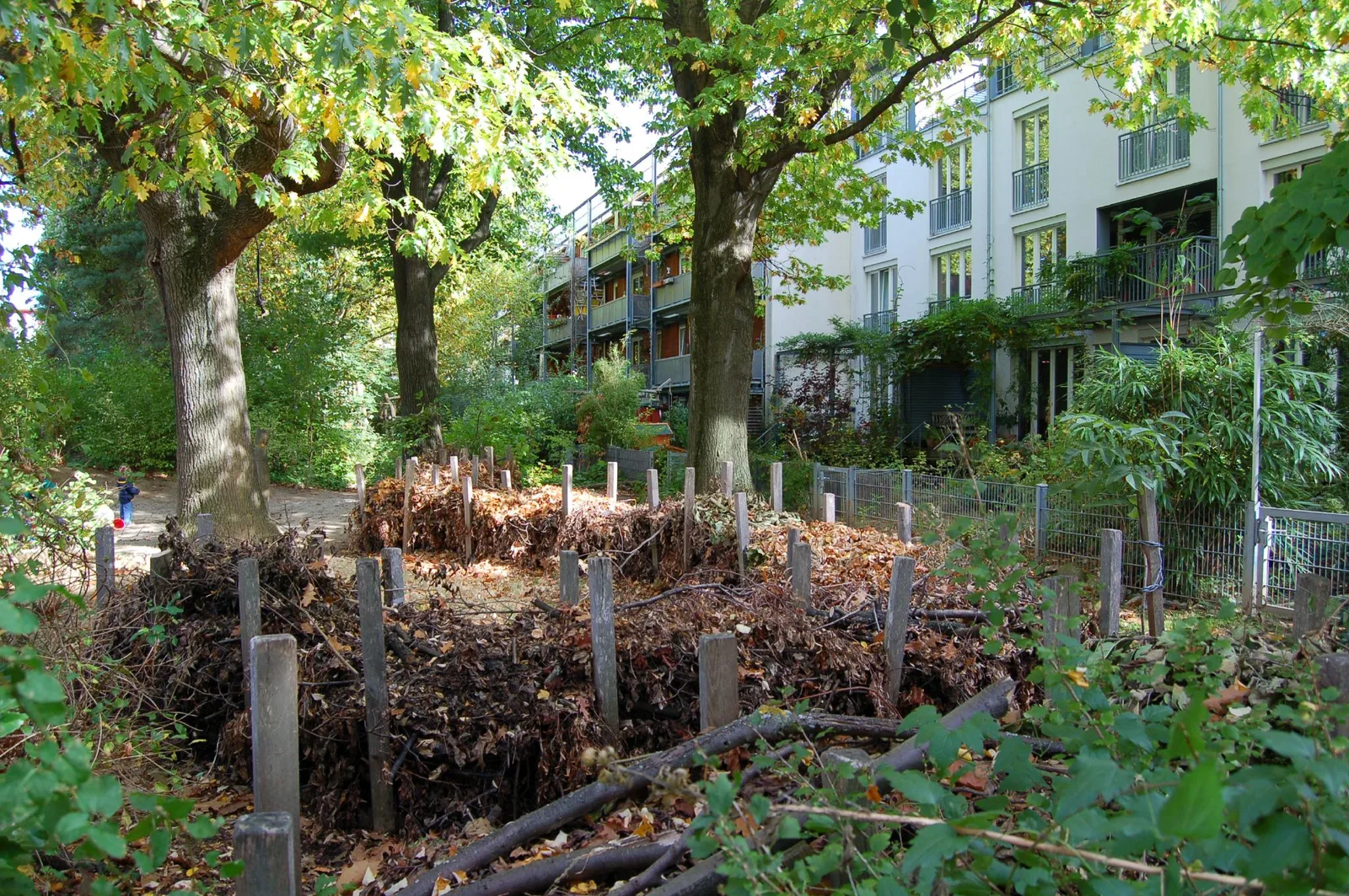
A cage of chicken wire. Knock four stakes into a shady, sheltered corner and wrap chicken wire around them. Make the cage as big as the space allows, because a big heap breaks down faster than a small one. Fill it with leaves, tread them down and water them if they are dry. Then leave it. A leaf heap does not need turning.
Black bags. If you have no room for a cage, fill ordinary bin bags. Wet the leaves if they are dry, stab holes in the bag with a garden fork and tie it loosely. Put the bags behind the shed or in the garage. The bag can be used again next autumn.
Moisture is the one thing you really have to get right. The fungi do not work in dry leaves, and a bag of dry oak leaves can look almost the same after a year as the day you tied it.
Collect the leaves on a dry, still day. The easiest way is to run over the lawn with the mower, collection box on. The mower shreds the leaves and mixes in a little grass, and shredded leaves do not mat into a wet slab but let air in. That is the difference between leaf mould in one year and in two. Whole wet leaves in a heap are exactly what mats.
Leave the leaves from the street and along busy roads where they are. They are full of litter and pollution from the traffic.
How long does leaf mould take?
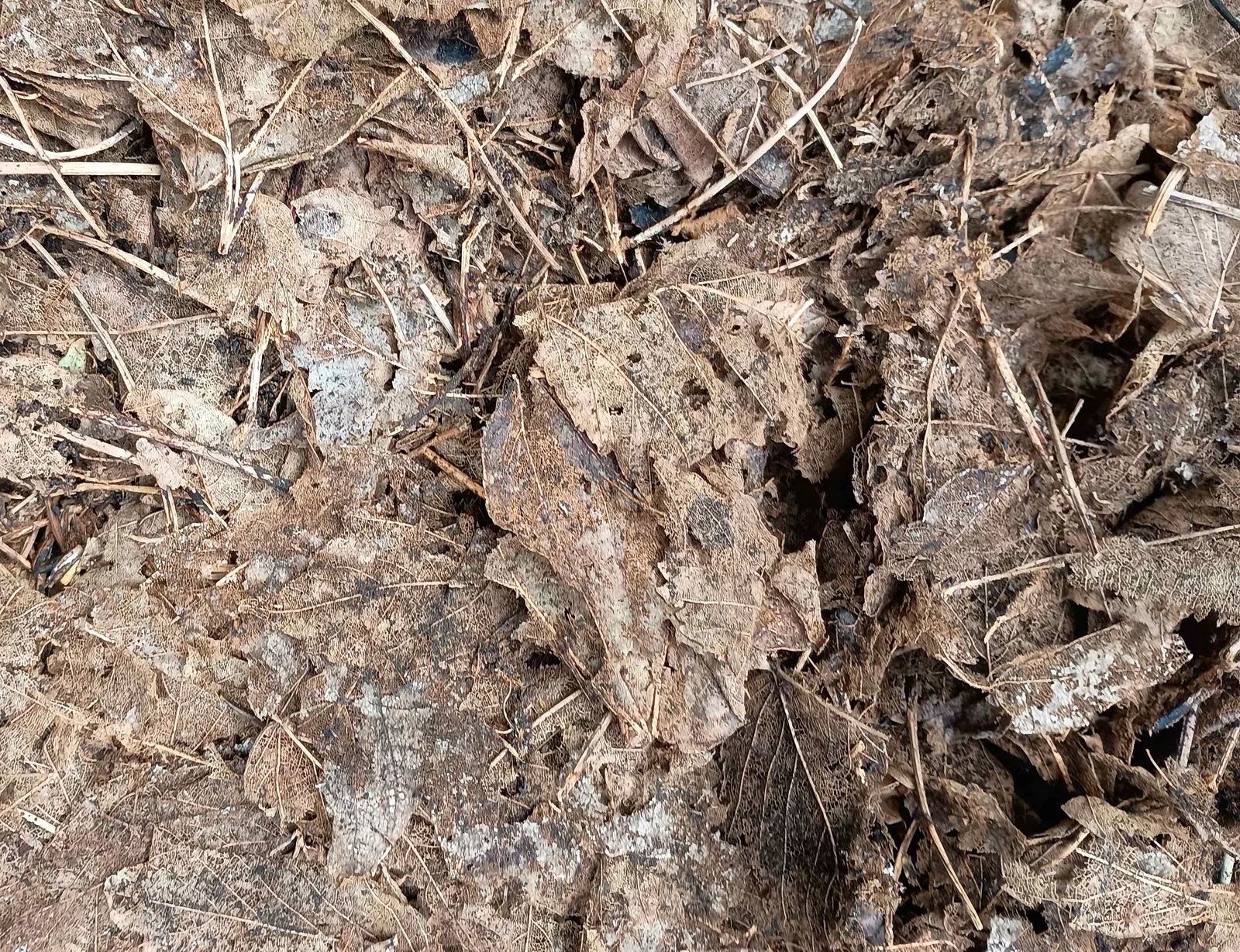
Two years for whole leaves, six to twelve months for shredded ones, according to the RHS. After the first year the heap is half rotted and coarse, but it works as a mulch. After two years it is dark and crumbly and smells of soil.
Those figures come from England, and they only hold where winter is mild. The microbes in a compost heap barely work below 10 to 12 °C (50 to 54 °F), and a leaf heap outside Stockholm sits cold or frozen from November to April. Sweden's allotment federation reckons on a year for a well-kept ordinary compost in the south of the country and longer in colder parts, and a leaf heap that nobody turns is slower than that.
So go by your winter. Where the ground rarely freezes, as in most of Britain, the RHS figures hold. Where it freezes for weeks, expect shredded leaves to be mulch by next autumn and seed compost the year after. Where it freezes for months, add another year.
It is no project for anyone in a hurry.
Which leaves rot fast, and which take years?
What decides it is the leaf itself. Thin leaves break down with no help. Thick, tough or waxy leaves hang around, and those you shred first or put in the ordinary compost.
| Leaves | How they break down | What to do |
|---|---|---|
| Oak | The best leaf mould, despite the reputation | Cage or bag. Shred to save a year |
| Beech | The best leaf mould | As for oak |
| Hornbeam | The best leaf mould | As for oak |
| Birch | Breaks down well | Cage or bag |
| Hazel | Breaks down well | Cage or bag |
| Maple | Breaks down well | Cage or bag |
| Sycamore (Acer pseudoplatanus) | Thick, tough leaves, slow | Shred first, or put them in the ordinary compost |
| Horse chestnut | Thick leaves, slow | Shred first. If the tree has leaf miner, the leaves go, see below |
| Walnut | Thick leaves, slow | Shred first |
| Plane | Tough leaves, slow | Shred first |
| Holly, cherry laurel and other evergreens | Waxy leaves, very slow | Shred and put them in the ordinary compost, where it goes faster |
| Spruce, thuja (arborvitae) and other conifer needles | Two to three years | Hedge clippings and needles do more good in the ordinary compost |
| Pine needles | Make acid leaf mould | A heap of their own, for rhododendrons, azaleas and blueberries |
| Apple and pear with scab | The disease overwinters in the leaves | Out of the garden, not in the heap |
Do oak leaves make the soil acid?
No, not enough for the RHS to warn about it. Oak leaves are at the top of its list of leaves that make the best leaf mould, and the only leaf mould the RHS calls acid is the one from pine needles. That is also why a heap of pine needles is worth keeping separate. Rhododendrons and blueberries want exactly that.
Ordinary garden compost is a different matter. It is so rich that SÖRAB advises against using it for acid-loving plants like rhododendrons. Leaf mould is poor in nutrients, and that is what makes it useful in places where compost is too strong.
Which leaves should stay out of the leaf heap?
A leaf heap never gets hot. Whatever overwinters in the leaves survives there and goes out into the garden with the soil two years later.
Apple and pear leaves from trees with scab. The scab fungus overwinters in the fallen leaves and sends spores up into the tree in spring. Rake up the leaves under that tree and take them to the tip, or put them in the green waste collection if yours composts at high temperature. There is more on scab and windfalls in the article on autumn garden jobs.
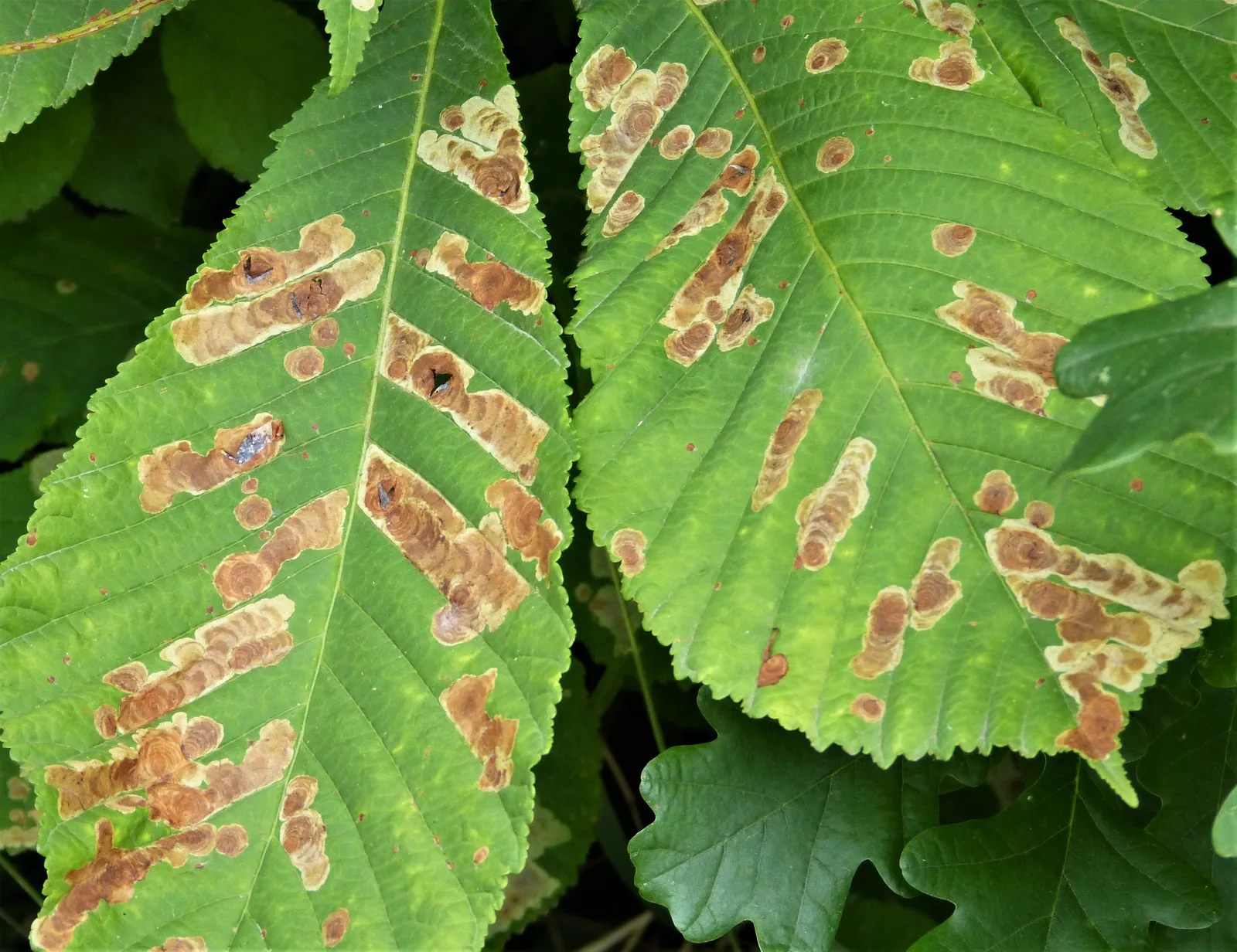
Horse chestnut with leaf miner. The horse chestnut leaf miner was first found in Britain in Wimbledon in 2002 and reached Sweden a year later, starting in Malmö. The larvae make brown blotches in the leaves, and the tree looks autumnal in midsummer. The moth overwinters as a pupa in the fallen leaves, so gather them up and get rid of them. Road salt also browns the leaves, so look for the long brown patches between the veins, where the larva eats inside the leaf, before you draw conclusions.
Invasive plants. Anything on your country's list of invasive species stays out of the compost. In Britain, Japanese knotweed counts as controlled waste and may only go to a licensed site. In Sweden, plants like Japanese rose and garden lupin must be burned or disposed of so they cannot spread. Check the rules where you live before anything goes in a heap.
What does the compost need before winter?
If you have a garden compost with two bays, fork everything from the first bay into the second this autumn. Water it, tread it down and cover it with straw or leaves. In spring, sieve out what has become soil and put the rest back in the first bay. Garden compost easily gets too dry, and ants in the heap are the surest sign of it.
A compost for food waste that is meant to keep working through winter has to be insulated, because decomposition stops below 10 to 12 °C. SÖRAB has a trick for a heap that has stalled in the cold: a plastic bottle of hot water pushed into the material gets it going again.
Compost attracts rats, and the bin is what keeps them out. Gaps and holes should be no more than a few millimetres, and since rats chew through both plastic and wood, metal or heavy stainless mesh is safest in the long run. Windfall apples and potatoes attract both rats and voles. Chop them up and bury them in the heap instead of leaving them on top.
Skip: Compost bins that promise finished soil in six weeks. Sweden's allotment federation calls it plainly wrong. In six weeks you get half-rotted material at best.
Half-finished compost, about three months old, is fine around fruit trees, berry bushes and roses. It is also good for mounding up roses before winter, and how to do that is in the article on hilling roses. Do not use it where you are going to sow. It is still breaking down and competes with the roots for oxygen and nitrogen, and half-finished compost can contain substances that stop seeds germinating.
If you are unsure, do the cress test. Sow garden cress in pure compost. If the seeds have not come up after five days, or the cress turns yellow after a while, the compost is not ready.
And do not expect too much. An average household's food waste makes about 25 litres of compost a year, according to SÖRAB. That covers 5 to 10 square metres of bed.
Do you need permission to compost?
For garden waste, almost nowhere. Leaves and grass clippings composted in your own garden need nobody's approval.
Food waste is where the rules start. In Sweden you have to notify the municipality before you compost kitchen waste at home, and it must go in a closed bin that rats cannot get into. In Britain and most of North America no permission is needed, but some councils and cities set rules for the bin. Look up your local rules before you start a food compost, not after.
Where does leaf mould do most good?
How old it is decides.
Under two years, or coarse: as a mulch on the borders, as a soil improver for clay or sand, as a winter cover over bare soil in the vegetable garden and as a top dressing on the lawn in autumn. It helps clay let air through and sand hold water. A layer over the garlic bed after planting is a good way to use it.
Over two years, and fine: as seed compost. Mix it into a potting compost with equal parts coarse sand, garden compost and ordinary garden soil. Leaf mould holds little food, and that is exactly why it suits sowing: it does not burn the seedlings.
A heap that has stood open for two years will have caught weed seeds. If a lot of weeds have grown on the heap, use the soil as a mulch and not for sowing.
And leave one heap untouched in a corner. Where there are hedgehogs, it is a free winter home for them.
Common questions
How long does leaf mould take?
About two years for whole leaves and six to twelve months for shredded ones, according to the RHS. That is for a mild English climate. Where the heap freezes for weeks or months, expect it to take a year longer. After one year the material already works as a mulch.
Can you make leaf mould in plastic bags?
Yes. Fill ordinary bin bags, wet the leaves if they are dry, stab holes in the bag and tie it loosely. The holes let air in, and moisture is what gets the fungi working.
Can you compost conifer needles?
Yes, but it takes two to three years. Spruce and thuja needles do more good in the ordinary compost. Pine needles can go in a heap of their own, because they make acid leaf mould that rhododendrons and blueberries like.
Should the compost be covered in winter?
The garden compost, yes. Cover it with straw or leaves so it does not dry out or get washed through by rain. A compost for food waste needs to be insulated if it is to work through winter, because decomposition stops below 10 to 12 °C.
Can I burn the leaves instead?
Sometimes, depending on where you live. Many councils and municipalities restrict or ban garden bonfires, and smoke from damp leaves is the kind neighbours complain about. Check the local rules first. Invasive plants should never be burned in the garden unless the rules where you live say that is the way to get rid of them.
Sources
Leaf mould
- Royal Horticultural Society, Leaf mould. Which leaves make the best leaf mould and which are slow, cage and bag, about two years for most leaves, pine needles for acid leaf mould, and what leaf mould is used for depending on its age.
- Royal Horticultural Society, Making the most of fallen leaves. That leaf mould is a slow breakdown by fungi, that the heap needs no turning, and shredded leaves in six to twelve months.
Compost in the garden
- Koloniträdgårdsförbundet (the Swedish allotment federation), Lätt om odling nr 13: Kompostera trädgårdsavfallet. In Swedish. Leaves as a brown layer, nitrogen for a heap of mostly leaves, the two-bay compost in autumn, a year in southern Sweden, the claim of finished soil in six weeks, and rats, mice and voles.
- SÖRAB, Råd för kompostering av hushållsavfall. In Swedish. Dry material for food waste, 10 to 12 °C as the limit for decomposition, insulated bins, rat-proof gaps, half-finished compost, the cress test and how much compost a household makes.
Leaves to keep out
- Forest Research, Horse chestnut leaf miner: help us monitor its spread. The first finding in Britain, in Wimbledon in July 2002.
- Royal Horticultural Society, Horse chestnut leaf-mining moth. The damage and how the moth has spread.
- Nyström, M. (2006), Kastanjemalen Cameraria ohridella: livscykel och utbredning i Sverige 2006. In Swedish. Degree thesis at SLU Alnarp. When the moth reached Sweden and how far it spread.
Rules
- Sveriges riksdag, Avfallsförordning (2020:614). In Swedish. The Swedish rules on garden waste, invasive plants and notifying the municipality before composting food waste, as amended from 1 July 2026.
The table of leaves is our own synthesis from the RHS advice, extended to the trees common in northern gardens. The times for cold-winter gardens are an estimate, not measured.