Is it too late to plant trees, shrubs and hedges?
For a bare-root hedge, the season only starts in late autumn. The plants are lifted from the nursery fields once they have gone dormant, from late October, and a hornbeam or privet with no soil round its roots can be planted right up until the spade hits frozen ground. In a mild, wet climate like most of Britain that means all winter, from November to March. Where winters are cold it usually means mid to late November. The same goes for hardy deciduous trees and shrubs. For arborvitae, yew, rhododendron and anything else that keeps its leaves through winter, though, it is too late wherever the ground freezes, and the same goes for anything that is only just hardy where you live. Those go in in spring.
Gardian is a Swedish garden app, and in Sweden this question has a hard deadline: the day the ground freezes, which can be late September in the north and December in the south. That is why the advice below runs off frozen ground rather than a month. In a mild climate the deadline mostly disappears, and the one that remains is waterlogged soil.
When does the ground freeze where you live?
Frozen ground is what stops you, not the first frosty night. The first frost comes weeks before the ground freezes properly, and as long as the spade goes through a thin morning crust into loose soil, you can plant. How to tell a crust from properly frozen ground is in the article on planting tulips late. The test is the same.
Evergreens have a different limit. They need four to six weeks with roots in warm soil before it freezes, and in a cold climate that window has closed by November.
| Your winter | The ground usually freezes | Bare-root and deciduous | Evergreens |
|---|---|---|---|
| Mild and wet, the ground rarely freezes (most of Britain and Ireland, coastal western Europe, the Pacific Northwest) | rarely, and briefly | November to March, on any day the soil is neither frozen nor waterlogged | autumn or spring, both work |
| Cold, the ground freezes for weeks (southern Scandinavia, central and eastern Europe, the US Northeast and Midwest, southern Canada) | mid to late November | until the ground freezes | by early October, otherwise spring |
| Long and hard, the ground freezes for months (northern Scandinavia and Finland, much of Canada, the mountains) | late September to October | usually past by late autumn, plant in spring | spring |
These are normal years. A mild autumn moves them by weeks, and a town garden with walls and paving round it freezes later than an open field a mile away. The spade has the final say.
Why does bare-root work when an arborvitae doesn't?
A dormant deciduous plant loses almost no water. It has no leaves to lose it through, so it gets by fine with a root system that has not yet grown into the soil. The roots keep growing whenever the soil is a few degrees above freezing, which in a mild winter is most of it. When spring comes, the plant is already in place and can get going as soon as the soil warms, well before you could have planted it yourself.
An arborvitae works the other way round. Its foliage loses water all winter, every time the sun warms it, and that water has to come from the roots. A newly planted one only has its own small root ball to draw on, and where the ground freezes, that ball freezes solid. The result shows in March: a brown plant that has dried out in the snow. It is called winter burn or winter desiccation, and it is the same thing that makes it worth watering evergreens before the ground freezes. In a mild, wet climate the roots can drink all winter, which is why evergreens planted in autumn there do fine.
Container-grown deciduous shrubs sit in between. They cope with late planting, but the root ball is peat-based compost, and it behaves differently from the soil around it. It holds more water, freezes harder and is the part that frost heave lifts. Tease out roots that have circled the pot before you plant, so they get a grip in the real soil, and firm well.
What can go in during late autumn, and what should wait for spring?
The "wait" column applies where the ground freezes. In a mild climate almost everything on this list can be planted from November to March.
| Plant | Plant in late autumn? | Why |
|---|---|---|
| Hornbeam, bare-root | Yes | The best season for it. Young hedges keep their brown leaves all winter, which is normal |
| Beech, bare-root | Yes | As hornbeam |
| Cotoneaster (C. lucidus) | Yes | Very hardy, one of the safest to plant late |
| Alpine currant (Ribes alpinum) | Yes | Tolerates shade and late planting |
| Serviceberry (Amelanchier) | Yes | Cheapest bare-root and establishes easily |
| Hawthorn | Yes | Establishes well bare-root. Wear thick gloves |
| Privet | Yes, where it is reliably hardy | Drops its leaves in a cold winter and comes back. Where it is borderline, wait |
| Spiraea, mock orange, lilac | Yes, container-grown too | Hardy and forgiving |
| Apple trees | Yes | Bare-root or potted. Stake straight away |
| Pears, plums, cherries | In spring where winters are cold | Stone fruit and pears are more vulnerable to a hard first winter |
| Roses, bare-root | Yes in a mild climate. Where winters are cold, plant and hill up straight away | How to hill them up is in the article on hilling roses |
| Birch | Spring where winters are cold | Establishes poorly from autumn planting, something nurseries have written about for a century |
| Magnolia | Spring | Fleshy roots that rot in cold, wet soil |
| Arborvitae, yew, spruce, pine | Spring where the ground freezes | Winter desiccation |
| Rhododendron, box, cherry laurel, holly | Spring where the ground freezes | The leaves lose water all winter |
| Anything borderline hardy where you live | Spring | Its first winter is its most dangerous, and it should meet it with a full season of roots |
How do you plant bare-root in late autumn?
Put the plants in a bucket or tub of water as soon as they arrive and let the roots soak for about a day. If you cannot plant within two or three days, heel them in, see the next section.
What kills a bare-root plant in late autumn and winter is not the cold in the ground. It is the minutes in the air. The fine roots dry out in a cold wind faster than you can dig the next hole, and if they freeze while lying on the lawn they are finished. Carry the bucket along the trench with you and take out one plant at a time. Pick a day when the soil is open, and plant in the middle of the day.
For a clipped hedge, dig a trench 50 to 70 cm (20 to 28 in) wide and set three to five plants per metre (yard). A trench is quicker than single holes and gives the roots loose soil to the sides. Plant at the same depth as in the nursery. You can see it on the stem, where a darker band shows where the soil line was. Willow and poplar can go 10 to 15 cm (4 to 6 in) deeper, but everything else stays level.
Backfill, give the plant a little shake so the soil runs in between the roots, and firm with your heel. Then water, even if it has rained all week. A full watering can per plant is not about drought in late autumn. The water settles the soil into the air pockets round the roots, and it is the air pockets that freeze and dry them out. How much and for how long is in the article on watering new trees.
Finally, spread about 10 cm (4 in) of leaves or grass clippings along the row. It holds off frozen ground for a few weeks, keeps the moisture in, and means the soil does not freeze and thaw as many times over the winter. Repeated freezing and thawing is exactly what pushes newly planted shrubs out of the ground.
Skip: Feeding. The plant will not grow until spring, and fertiliser put down in autumn will have washed away by then.
Hedging plants should be cut back by about a third to make them bushy at the base, but do it in spring as the buds start to swell. A cut made in autumn stays open all winter and gives you nothing for it.
How do you heel in plants you cannot plant yet?
Sometimes the delivery arrives the same week as the frost, or the bed is not ready. Then you heel them in. Dig a shallow trench in a shady spot, lay the plants in it at an angle of about 45 degrees, and cover the roots and a bit of the stem with moist soil. Firm lightly. They can stay there all winter and be planted when the ground thaws.
If the ground has already frozen, stand the plants in a bucket or sack of moist soil in an unheated garage, somewhere cold but not frozen hard. Check the moisture once a month and plant as soon as you can dig.
Does a newly planted tree need a stake?
Yes, for the first few years. A tree that rocks in the wind tears off new roots as fast as they grow. Drive the stake in before you backfill round a bare-root tree, so you can see where the roots are and do not spear them. Two stakes are better than one, and if you use two, put one on the side the wind most often comes from, which in Britain and Scandinavia is usually the south-west.
Set the stake a little away from the trunk so the bark does not rub against it. Tie with a wide strap, never wire, and check the tie every spring. What was fine in November can cut into the trunk by July. Take the stake away after two or three years.
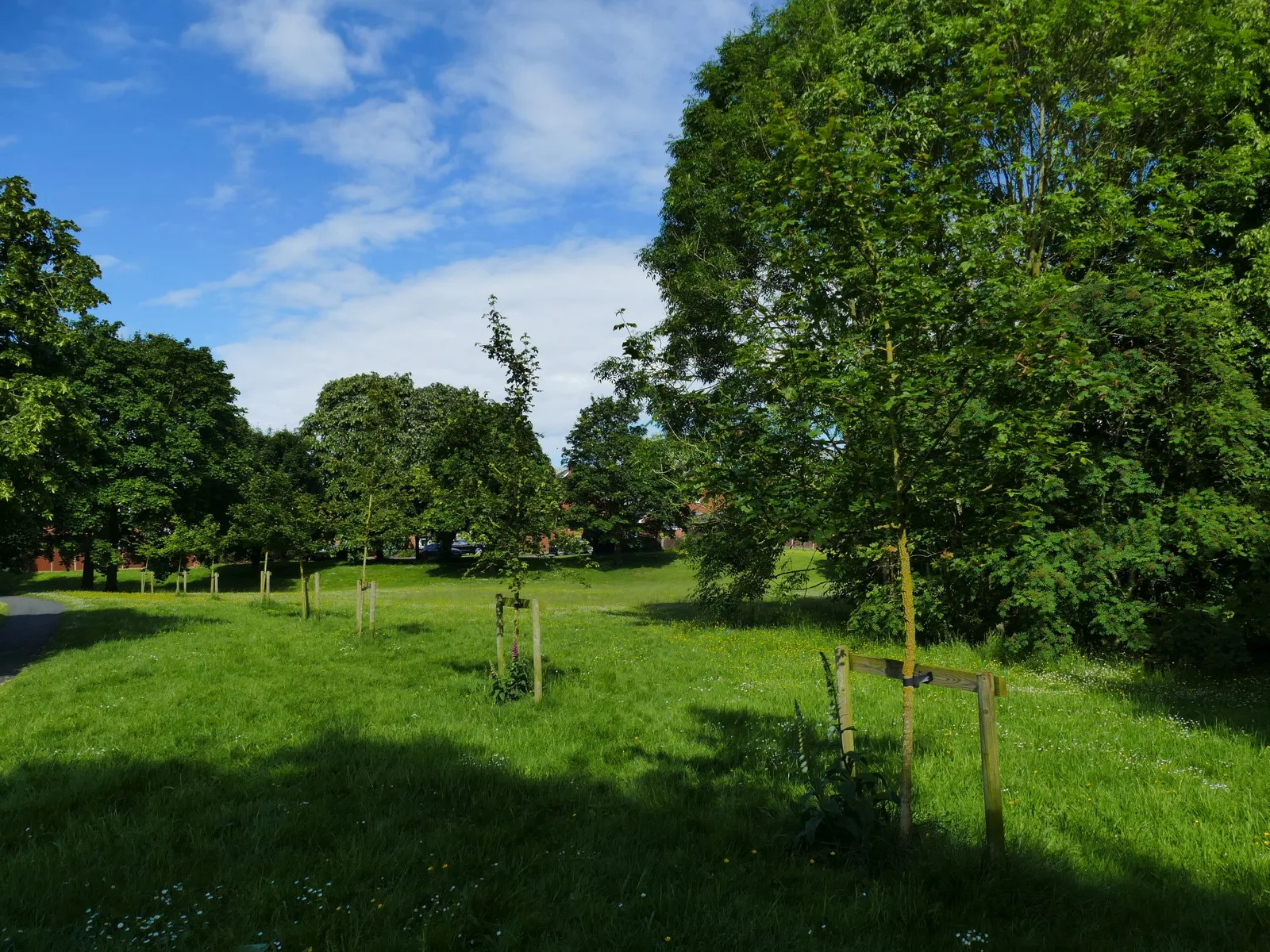
A newly planted tree is also exactly what rabbits, hares and voles go looking for when the snow comes. How to protect the trunk is in the article on protecting young trees in winter.
What do you do with an arborvitae from the autumn sale?
The end-of-season nursery sale is tempting, and a row of conifers at half price is hard to walk past. If you have bought them late in the season, there are two ways forward.
In a mild climate, plant them straight away. Water them in well and that is it.
Where winters are cold but not long, you can still plant if the ground has not frozen. Water thoroughly two or three times before it does, spread leaves over the root zone and put up shade netting on the south and west sides from February. It is the late-winter sun on frozen roots that scorches the foliage, and the netting takes the sun away.
Where winters are long and hard, they wait. Sink the pots into a border on the north side of the house, up to the rim, where the winter sun does not reach, and pack leaves round them. A pot standing above ground freezes right through, and the roots are the part of the plant that tolerates the least cold. In spring, when the ground has thawed, plant them as usual.
What if frost has lifted the plant?
Walk the row when the ground thaws in spring. If a plant stands higher than its neighbours, or the root ball shows above the soil, it has been heaved up. It is not necessarily dead. Press it back with your heel, top up the soil where the roots are exposed, and water.
If you are unsure, scratch the bark of a branch gently with your thumbnail. Green underneath means it is alive, and then it nearly always comes back once the warmth arrives. Brown and dry all the way down to the ground means it did not survive the winter.
Common questions
Can you plant a hedge in November?
Yes, if it is bare-root and deciduous and the ground can still be dug. November is one of the best months for bare-root hornbeam, privet and beech. In a mild climate the same goes for evergreen hedging. Where the ground freezes, an evergreen hedge of arborvitae or yew waits for spring.
Can you plant into frozen ground?
No. If the spade will not go through the frozen layer, the roots get no contact with the soil and you cannot firm them in. Heel the plants in, or keep them cold and frost-free, and plant when the ground thaws.
How late can you plant fruit trees?
Apple trees can go in until the ground freezes, preferably bare-root, and in a mild climate all winter. Where winters are cold, plant pears, plums and cherries in spring instead, because they are more vulnerable to a hard first winter.
Should you water new shrubs in winter?
Only before the ground freezes. Then they should have a thorough soaking. Once the ground is frozen, the water just runs off or turns to ice, and it does no good. In a mild climate, water in dry spells, which in winter is rare.
Is it better to plant in spring?
For bare-root plants in a mild or cold climate, autumn is better, because the plant is in place and can start growing as soon as the soil warms. Where winters are long and hard, and for evergreens wherever the ground freezes, spring is safer. Container-grown deciduous shrubs do well either way.
Why is bare-root only sold in autumn and winter?
The plants are grown in open fields and lifted with bare roots once they are dormant. Without a pot and compost they are cheap, but they only survive without soil as long as they have no leaves that need water. That is why they are on sale from late autumn until the buds break in spring.
Sources
- Royal Horticultural Society, Jobs for November: Trees & shrubs. Bare-root deciduous trees, shrubs and hedging available from November and planted promptly, heeling in when the ground is waterlogged or frozen, and evergreens bought in pots.
- Plantagen, Plantera en häck, så lyckas du. In Swedish. Bare-root plants in late autumn or early spring, trench width, plants per metre, and shade netting against the late-winter sun for evergreens.
- Granngården, Planteringsråd prydnadsträd. In Swedish. Heeling in if planting is delayed more than a couple of days, planting depth, stakes towards the south-west, and watering in.
- SMHI (Swedish Meteorological and Hydrological Institute), Den första höstfrosten håller tidtabellen. In Swedish. Normal dates for the first autumn frost in Sweden, 1991-2020.
- TV4, Trädgårdstips: Så får du växterna att klara vintern. In Swedish. That the roots are the sensitive part of a plant in a pot over winter.
The dates by climate are our estimate of when the ground usually freezes, built on Swedish frost data and on RHS timing for mild climates. The table of what to plant in late autumn is our own synthesis of nursery advice and experience.