Which vegetables can stay in the ground over winter?
The sweetest parsnip is the one you dig as the ground thaws in spring, after a whole winter in the soil. Kale, Brussels sprouts, leeks, parsnips, Jerusalem artichokes and salsify all take the cold and can stand in the bed until spring, and several of them get sweeter for the frost. Whether the plant survives is rarely the question. Whether you can get at it is. You pick kale out of the snow, but a parsnip in frozen ground is stuck there until it thaws, so where winters are cold, cover the row with 15 to 20 cm (6 to 8 in) of straw or leaves before the ground freezes if you want to harvest through the winter. In a mild, wet climate you can leave carrots and beetroot in too. Where the ground freezes for weeks, lift them.
Gardian is a Swedish garden app, and in much of Sweden the vegetable bed is frozen solid for three or four months. That is why this article is as much about getting to your vegetables as keeping them alive. In a mild climate most of the problem goes away, and the list of what can stay out gets longer.
Which vegetables can stay in the ground?
| Vegetable | Stays over winter? | What to do |
|---|---|---|
| Kale | Yes, all winter, everywhere | Pick the lower leaves as needed, frozen too. Net against deer and rabbits |
| Cavolo nero | Yes where winters are mild | Takes less cold than curly kale. Cover with fleece in a hard frost |
| Brussels sprouts | Yes | Pick from the bottom up. Stake the stem, heavy snow snaps it |
| Leeks, winter varieties | Yes | Cut off at soil level if frozen in |
| Leeks, summer varieties | Uncertain | Use them first, they take less cold |
| Parsnips | Yes | Cover for a winter harvest where the ground freezes. Lift the last before new leaves show |
| Hamburg parsley | Yes | As parsnips |
| Jerusalem artichokes | Yes | Cover for a winter harvest where the ground freezes, otherwise dig in spring |
| Salsify and scorzonera | Yes | If you did not get round to them, lift in spring |
| Welsh onion | Yes, perennial | Starts growing as soon as the soil thaws |
| Garlic, planted in autumn | Yes, it should | Harvested the following summer |
| Parsley, chard, spinach | Maybe, under fleece | If they survive, they give the first leaves in early spring |
| White and red cabbage | Take frost, but bring in before a hard freeze | Store cool with the root on |
| Carrots | Yes where winters are mild and the soil drains. Lift where the ground freezes | Voles, and wet winter soil |
| Beetroot | Lift where the ground freezes | Takes only light frost and turns woody if left too long |
| Swede | Lift late in autumn where the ground freezes | Splits if left too long |
| Celeriac | Lift | Takes a few degrees of frost, not a cold winter |
Where winters are long and hard, with deep frozen ground for months, the safe ones are kale, parsnips, Jerusalem artichokes, salsify and Welsh onion. The rest is a lottery.
How do you get at parsnips when the ground has frozen?
You do it before the ground freezes, not in the middle of winter. Once the soil freezes the roots are stuck, and a week of hard frost is enough to make digging impossible. Cover the row with 15 to 20 cm (6 to 8 in) of straw or leaves before the frost goes into the ground. The layer keeps the soil underneath open as long as the winter is not too severe, and snow on top insulates it even better. In a mild climate you can skip this. The ground rarely freezes deep enough to matter.
Push canes into both ends of the row before you cover it. That strip of straw looks like all the other snow a month later, and digging up the wrong metre in deep snow is something you do once.
Dig with a fork, not a spade. A parsnip is long and thin, and a spade cuts it in half. Push the fork in a little way from the root and lever, and it comes up whole.
The waiting pays off. Cold makes the parsnip turn starch into sugar, and a root that has been through a few frosty nights tastes sweeter than the same root in September. The same goes for Hamburg parsley.
Lift the last parsnip as the ground thaws in spring and before the plant starts putting out new leaves. It is a biennial. In its second year it puts everything into flowering, and the root turns woody and inedible in a few weeks. In a mild climate that can be February. Where winters are long, it is May.
Should carrots stay in or come out?
Carrots take frost. The soil protects them, and a cold night in autumn does them no harm. The question is the rest of the winter, and the answer depends on your soil and your winter.
In a mild climate on light, free-draining soil, do as the Royal Horticultural Society suggests: cut off the leaves, cover the row with straw or cardboard, and lift the carrots as you need them. That stops working when the soil gets waterlogged, so on heavy clay, lift them anyway.
Where the ground freezes, lift them. A layer of straw over a row of carrots is the best winter nest a vole could want. It tunnels around under the straw, safe from cats and owls, and when you lift the cover in the middle of winter you find roots with tooth marks, or just the hole where they were. On wet clay, the soil also freezes and thaws over and over, and carrots standing in cold, waterlogged soil rot.
Lift them before the ground freezes, cut the tops off a centimetre (half an inch) above the root, and store them in a box of sand or slightly damp peat-free compost. Keep them just above freezing, dark, and with a little moisture in the air. Most modern cellars are too warm and too dry. An unheated garage that stays frost-free usually does better.
Beetroot, swede and celeriac are stored the same way as carrots. Beetroot takes the least cold of them, so lift it first.
Leeks that have frozen in
Leeks look miserable after a hard frost. The leaves hang and go grey. They recover, and they keep growing slowly all winter whenever the temperature allows.
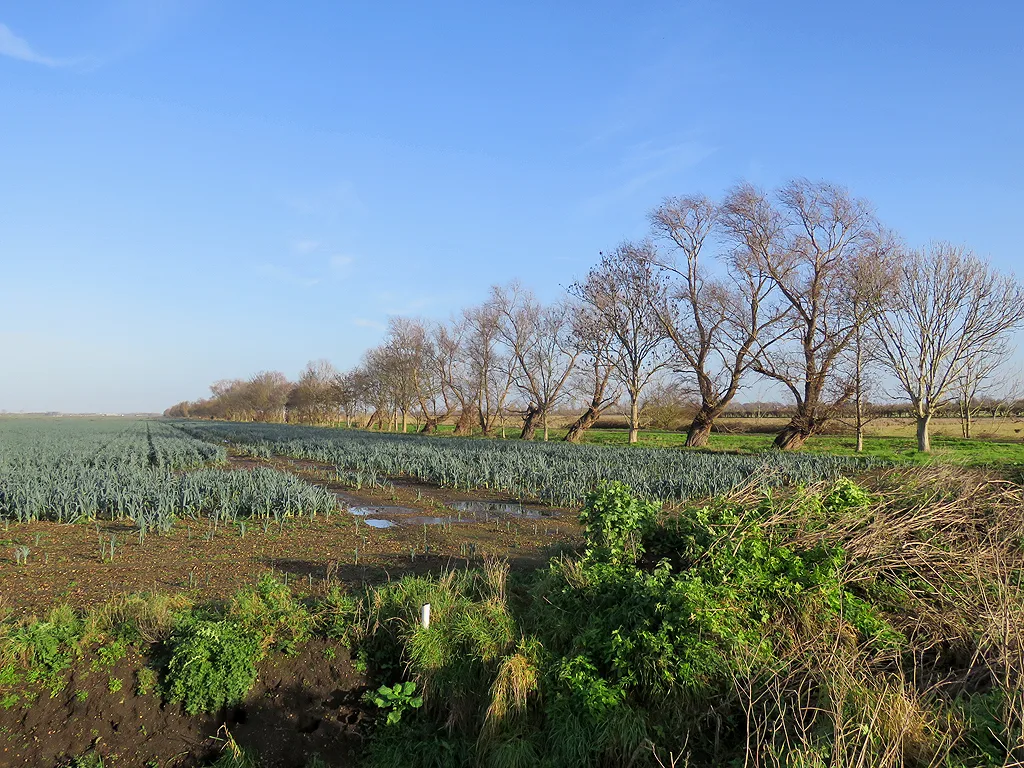
It is the winter varieties that manage it. You can tell them by their blue-green leaves, and the seed packet usually says winter or hardy. The pale green summer types take less cold, so use them first.
If a leek has frozen in, do not pull. It snaps, and the rest stays in the ground. Cut it off at soil level instead and leave the root. A frozen leek can go straight into the pot, or be sliced and frozen.
When the days lengthen in spring, leeks send up a flower stalk. The centre then turns hard, so lift whatever is left before that happens.
Kale: nets, snow and when it is finished
Kale is the hardiest vegetable in the bed and the one you can count on in any climate. Pick the lower leaves and leave the top in place, and it keeps producing.
Frozen leaves are perfectly good to cook. Pick them as they are, but do not bend them while they are frozen stiff, because they split. Drop them in cold water for a while and they thaw.
Put a net round the row or bed. Deer, rabbits and hares look for exactly the green that sticks up out of the snow, and they can take a whole row in a night. A net on posts keeps rabbits out. Deer need a taller one.
When spring comes, kale sends up flowering shoots. They taste like tender sprouting broccoli and for many growers are the best part of the whole crop. When the buds open into yellow flowers the plant is done, and you pull it up.
Can you sow anything in late autumn?
Parsnips and parsley can be sown late in autumn, so the seed lies in the soil over winter and germinates as soon as the ground warms in spring. Both are slow to come up, and an autumn sowing gains you several weeks.
The trick is to sow when the soil is so cold the seed has no time to germinate before winter. Sow too early and it comes up, and the small seedlings die in the cold. Wait until just before the ground is about to freeze. In a mild climate, where it may never freeze, this method does not work, and spring sowing is better. It also needs light, sandy soil. In acid clay the seed rots before spring. Cover the sowing with straw or dry leaves afterwards, and do not water.
What do you do with the empty soil?
Cover it. Bare soil over winter gets pounded by rain, the nutrients wash down past where roots can reach them, and by spring the surface has crusted. Spread 5 to 10 cm (2 to 4 in) of leaves over the beds, or half-finished compost. The worms pull it down into the soil over the winter, and in spring you rake aside what is left and sow as usual.
The leaves off the lawn do the most good here, and what to do with the rest is in the article on leaf mould.
Skip: Digging the whole bed over in autumn. It breaks up the soil structure you have built and wakes up weed seeds that were lying deep. The exception is heavy clay where the ground freezes: dig it up in rough clods and let the frost break them down over winter.
In late autumn it is too late to sow green manure where winters are cold, because the plants have no time to grow before the frost. In a mild climate, field beans and grazing rye can still go in during autumn. Otherwise, plan it for the following season, straight after the early potatoes or peas are harvested. If you have planted garlic in one of the beds, how it should be treated over winter is in the article on when to plant garlic.
Common questions
Can kale survive frost?
Yes. Kale is fully hardy and stands all winter even where winters are long and hard. The leaves can be picked frozen. Net it against deer and rabbits.
Can you leave carrots in the ground over winter?
In a mild climate on free-draining soil, yes: cut off the tops and cover with straw. Where the ground freezes or turns waterlogged, many will be eaten by voles or rot. Lift them before the frost and store them in sand just above freezing.
Do parsnips taste better after frost?
Yes. Cold turns the starch in the root into sugar. Harvest after a few frosty nights, or leave them in under straw and dig in spring before they start growing again.
How long can leeks stay in the ground?
Winter leeks can stand until they send up a flower stalk in late spring. The centre then turns hard. If one has frozen in, cut it at soil level instead of pulling.
Should you cover a vegetable bed over winter?
Yes, with 5 to 10 cm (2 to 4 in) of leaves or half-finished compost. It protects the soil from rain and crusting, and the worms work it in over the winter. Rows you want to harvest from get a thicker layer, 15 to 20 cm (6 to 8 in).
Can I dig Jerusalem artichokes in spring?
Yes, as soon as the ground has thawed. Leave a few tubers if you want them next year. You will get them anyway, since a single forgotten tuber becomes a new plant, and Jerusalem artichokes are hard to get rid of.
Sources
- Royal Horticultural Society, Hardy winter vegetables. Kale, Brussels sprouts, leeks and parsnips standing all winter, and 15 to 20 cm of straw to keep parsnips diggable through a week of hard frost.
- Royal Horticultural Society, Vegetables: growing for winter. Which vegetables stand through winter and which leafy crops need protection. Heavy fleece gives about 2 °C of protection.
- Royal Horticultural Society, Carrots. Leaving carrots in under straw or cardboard, and lifting them if the soil gets waterlogged.
- Koloniträdgårdsförbundet (the Swedish allotment federation), Lätt om odling nr 2: Skörda och lagra. In Swedish. Kale and Brussels sprouts out all winter with nets against hares and deer, frozen leeks cut at soil level, Jerusalem artichokes under cover, and storing roots in sand.
- Svenska Yle, Läs om hur du kan odla rotsaker på bästa sätt. In Swedish. Parsnips are winter hardy, gain sweetness from frost, and can be dug in spring before the new season.
- Svenska Yle, Höstsådd. In Swedish. Autumn sowing of parsnips and parsley, sandy soil, and salsify overwintering in the ground.
The table of what stays in is our own synthesis of the sources above and of experience from Swedish allotments. How long vegetables last depends more on the winter than on the variety, and a mild year leaves more standing than the table suggests.